by Art Kallenbach | Aug 3, 2026 | Car Wash Pit Pumping, Commercial Drain Services, Maintenance
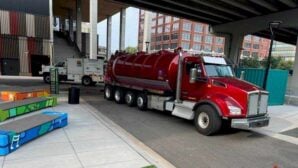
Car wash pit pumping starts with powerful vacuum equipment that clears out the pit, collection trap, and any holding tanks connected to the system. The goal is to remove the sludge, oil, and sediment that's settled since the last visit without disrupting the wash bays any longer than necessary.
Once the pumping is done, the debris is hauled away and disposed of properly, and the site is left ready to keep running wash cycles. Many properties also get documentation of the service, which helps with local compliance requirements around wastewater and interceptor maintenance.
by Art Kallenbach | Aug 3, 2026 | Car Wash Pit Pumping, Commercial Drain Services, Maintenance
A car wash pit rarely goes from fine to shut down without warning. Most owners notice small changes first: a wash bay that drains a little slower than it used to, a faint odor near the pit area on a warm day, or a reclaim system alarm that trips more often than it used to.
Those changes are usually tied to how much sediment, oil, and sludge has built up since the last pumping, and that buildup rate isn't the same for every location. A high-traffic wash that sees a lot of undercarriage sand fills its pit faster than a standard exterior-only wash, which is why staying ahead of it really comes down to watching your own site's patterns rather than following a one-size-fits-all number.
Once an owner starts noticing the early signs, that's the window to schedule service before things escalate. Wait too long past that point, and the same pit that was just draining a little slow can tip into a full backup during a busy wash cycle, which is a far more disruptive and expensive problem to solve than a routine pumping would have been.
by Art Kallenbach | Aug 3, 2026 | Car Wash Pit Pumping, Commercial Drain Services, Maintenance
It's tempting to think of a skipped pit pumping as just deferred maintenance, something that'll eventually get scheduled, no real harm done in the meantime. In practice, the costs start adding up well before the pit actually backs up.
A pit running past its capacity makes the whole reclaim system work harder, since it's processing water that's carrying more sediment and oil than it's designed to handle. That extra strain shows up as more frequent equipment wear, more alarms, and sometimes a reclaim system that stops keeping pace with wash volume altogether.
Then there's the disruption itself. A wash bay that has to shut down for an emergency pump-out during business hours costs a lot more than the service call. It costs lost wash cycles, and for many locations, unhappy customers who show up to find the bay closed. Treating pit pumping as routine maintenance rather than a problem to react to is almost always the cheaper path.