How do Grease Traps Work?
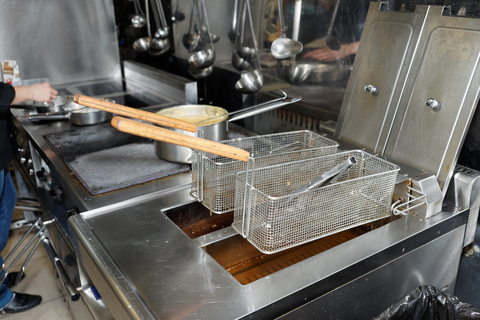
If you are involved in a food business such as a restaurant, café, or hotel, you are probably aware that you have to prevent grease from entering the sewer system after exiting your establishment’s sink and drainage. By law, all commercial kitchen areas in the U.S. are required to have grease traps installed to prevent this from happening.
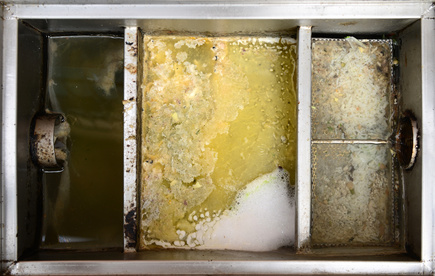
A grease trap, also known as a grease interceptor, is part of the drain service structure designed to prevent grease and other food-waste materials from entering a septic system or sewer. Without it, grease and oily substances will congeal, form a solid mass, and cause blockage, which may lead to burst pipes. Damages caused by grease blockage can be very costly and taxing. That is why law requires installations of grease traps in establishments where a huge amount of grease is used.
Different types of grease traps are available, depending on how your business operates. These include single-tank traps, double-walled tanks, solid interceptors, oil-water separators, and above-ground interceptors. There are slight differences in how each type works, but they all perform the same basic function, to separate fat, oil and grease from water and solid-food waste. Imagine taking a pail of cold water and pouring in oil. The oil will float to the top of the pail and solidify.
This is how a grease trap works. From the drain, it captures the untreated water (water with grease, oil and other solid-food wastes) and deposits it into the grease-trap tank. This tank acts as a reservoir and holds the wastewater and food that passes through the trap. Solid-food wastes, being the heaviest, drop to the bottom. As the greasy substances harden, they float to the top of the tank, displacing the liquid at the middle. A tube fitting is attached to the tank, allowing the liquid to flow into the sewer or sanitary system. Some grease traps are designed to have a second tank to trap additional grease that may have escaped through the first tank, and the same process is repeated.
Like any other equipment, grease traps need to be properly cleaned out so they work as intended. Over time, it is possible to develop clogs in the flowing line (both ingoing and outgoing) and crossover tube, even if the grease-trap tank is not full.
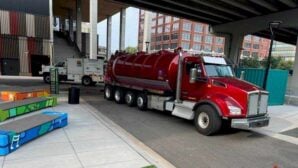
If you have any technical issues with your grease interceptor, contact the manufacturer or hire a Drain King professional to test for and repair any malfunctions. Alternatively, a full grease trap is no longer capable of filtering any grease or solid food. You can either call the manufacturer or hire us to empty the contents of the tank and restore its operative capacity.
Common grease-trap maintenance expenses include drain snaking, power jetting, and line jetting. Maintenance is needed when drain service between the drain, grease traps, or sewer gets blocked with grease deposits. These deposits are removed by forcing water down the pipes with high pressure to push the grease out with power-jetting or line-jetting procedures.