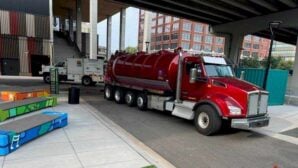
Commercial kitchens produce a large amount of grease and fats that need to be disposed of regularly to maintain functionality and environmental regulations. Restaurants use grease traps or inflammable waste traps to collect these FOG (fat, oil, grease) materials, which prevents them from congealing in pipes and causing the sewer system to overflow. The grease collected from these kinds of kitchens can be categorized into two separate types: yellow grease and brown grease.
Yellow grease is typically used cooking oil left over from deep fat fryers and industrial-sized griddles. When the fryers need to be cleaned, the used grease is emptied into metal drum containers where it cools and congeals, and can then be recycled. It is considered a "clean" type of grease because the food it comes in contact with is either fresh or frozen, so there is no chance of contamination. Recycled yellow grease is mainly used to feed livestock, but it's also used to make soap, cosmetics, detergents, rubber, and some types of clothing. It can even be used to create biodiesel fuel! Biofuels that have been created from yellow grease burn cleaner than other types of fuel, they have a lower carbon content, and they don't produce carbon monoxide. They can be used to generate power and heat.
Brown grease is used to describe the FOG materials that are collected in grease traps or waste traps. These receptacles are designed to catch the FOGs before they can contaminate the rest of the sewer line. Some are small enough to fit under a commercial sink, while others need to be installed underground. Because the waste traps hold everything that is washed down a commercial drain, the grease mingles with rotting food and dirty water, making it unsafe and unsanitary for recycling purposes. Brown grease is usually pumped out of the waste traps and disposed of in landfills or incinerated. In the last few years, there has been some interest in creating ways to recycle brown grease. While it will never be suitable to manufacture the same types of products as its yellow counterpart, brown grease has the potential to become a viable alternative to diesel fuel and an oil substitute for heavy fuel. Developing technology may make it possible for brown grease to be processed in a manner similar to yellow grease, making it a viable source of biofuel.
The most important thing to remember about grease, whether yellow or brown, is to keep it out of your drain as much as possible. If left untreated, grease buildup almost always leads to sewer overflow. Remember to collect it and throw it away instead of dumping it down your sink or toilet! The environment will thank you, and so will your wallet!
For those who live outside the city and have a septic system, it is important to take proper care of your septic tank. If it is maintained properly, you will have minimal problems and will save money on repairs in the future.
When planning landscaping, gutters, and foundation drains, it is essential to make certain rainwater is diverted so the septic tank and drain field don’t become overloaded. A drain field that has collected excess water will not be able to absorb and neutralize liquid waste. Keep trees about 100 feet away from the septic system, so they don’t damage it. Trees like willows have an aggressive root system and need to be planted even further away. Vehicles must not be driven on, or parked on top of the septic tank. Neither should any structure, concrete, or asphalt cover the tank. Large farm animals must also be kept away. The weight any of these would add can damage it.
Inside your home, make sure faucets and toilets don’t leak, use aerators and low flow nozzles on faucets and showers to help with lowering water usage, use the right setting for small loads of laundry, run the dishwasher when full, and install a displacer on your toilet to reduce the amount of water used.
Only use toilet paper in your toilet. Things like cat litter, disposable diapers, sanitary napkins and tampons, paper towels, tissues, and cigarette butts will quickly clog your septic tank.
If you have a garbage disposal, make sure it can grind food into tiny particles that are easier for your septic system to break down. A lower quality disposal can increase the amount of solids waste that empties into your tank. Never pour grease down the drain. It can cause clogs and make it difficult for liquids to be absorbed by the soil.
Use of heavy cleaners will kill the good bacteria in the septic tank, which can hinder the breakdown of solids. It is also important to properly dispose of varnish, paint thinners, motor oil, gasoline, and other similar chemicals. If poured down the drain, they can ruin your septic system and get into the groundwater.
Regular maintenance, cleaning, and inspecting should be performed by a licensed contractor like the professionals at Drain King. Our technicians are experienced in emptying septic tanks and have the permits needed to collect and dispose of waste. Solids need to be pumped from the tank every 3-5 years. This can vary depending on the size of the tank, the number of people residing in the home, and whether what is allowed into the tank is controlled. The baffles inside the tank should be inspected when it is emptied to make sure the waste is being properly dispersed within the tank and no solid waste is getting into the field lines. If the baffles are damaged, major—costly—problems can quickly develop.
Sewers and drains are important parts of a building structure. While drains are easier to maintain and clean, sewers require more time and money when they clog. Sewers are installed deep underground, so most likely, you will not think of them unless they have become a problem.
What are the Signs of a Clogged Sewer?
Toilets –Typically, toilets are designed to flow into the most direct path to the sewer, so if there is a problem in your sewer pipes, you will probably encounter difficulties in flushing them. Water backing up when flushing is a sure sign of a sewer problem. The flushed water cannot go down the drain when the sewer pipes are clogged.
Kitchen Sink/Tub Drain–If you run water in the sink or bathtub and can see bubbles or the water is draining slowly, chances are your drains or sewers are clogged.
Nasty Smell–Collected water from overflowing, hidden drains emits a foul odor. Sometimes, you will first notice the odor before you even realize you have a sewer problem.
Common Causes of Clogged Sewers and Drains
Collapsed/Broken Sewer Lines
Collapsed or broken sewer lines can cause blockage. Sewer lines break due to old age, presence of large roots, structural settings, and soil movement. Our plumbing professionals can discover the cause by inserting a rodding machine or inspection camera along the sewer lines.
Grease/Oil Deposits
Grease and oil deposits are the most common cause of blocked sewer lines. Some people believe that it is okay to pour greasy substance down the sink or toilet as long as you follow it up with hot water. While grease flows into the sewer lines as liquid, it will solidify as it cools down, causing blockage over time.
Hair
Blocked drains in the bathroom or tub are usually caused by fallen hairs. Hairs sit in the pipes and accumulate over time, blocking the flow of water. As preventive maintenance, you can use a filter that will trap fallen hair particles before they enter the drain system.
Bath Salts
Bath salts have become popular and are widely used, but these products do not dissolve. When they go down the drain, they will accumulate and cause problems.
Improper Wastes
Sanitary sewer lines are specifically fabricated to accept human wastes. Other items such as paper towels, feminine sanitary pads, condoms, diapers, baby wipes, dental floss, and solid food particles can cause blockage when flushed down the toilet or sink. Foods such as rice and pasta expand as they absorb water from the pipes and may cause blockage.
As a property owner, you will experience clogs or sewer blockage at some point in time. When this happens, it is recommended that you call on experts like Drain King who have the skills and experience to solve the worst drainage and sewer problems. You might be tempted to fix the problem yourself, but improper handling of store-bought cleaning products may cause more harm than good. Some can even damage your esophagus when inhaled.
A septic system is a catch basin for all the solid and liquid waste that is collected from a home’s drains and toilets. Each time you wash your hands at the bathroom sink, wash dishes in your kitchen sink, take a shower, or flush the toilet, wastewater drains from your house into a tank that makes up a septic system. For houses that are not serviced by public sewers, homeowners must install a septic system to trap, treat, and dispose of wastewater.
Septic systems must be well-maintained in order to function properly and to provide reliable service for years to come. Poorly functioning systems can cause property damage, pollution, and even disease. Though a significant financial investment, a well-constructed system is a necessity for any homeowner or property owner, especially if he plans to sell his home in the future.
Main Parts of a Septic System
A typical septic system consists of three parts.
The tank or septic tankIn a typical home, a septic tank may be constructed of concrete or steel and can hold about 1,000 gallons of water. It is buried near the home, and wastewater drains into and collects within it. There are three layers in a typical septic tank. The first is the scum layer, composed of anything that floats. The bottom layer is called the sludge layer, where waste that is heavier than water sinks. The middle layer may look fairly clear, but this is where bacteria and toxic chemicals reside.
The drainfieldThe liquid or middle layer of the septic tank contents flow to the drainfield. As new wastewater enters the septic tank from the house, old water is released through a series of perforated pipes that are typically 4 inches in diameter. These pipes are buried in a trench 4 to 6 feet deep and filled with gravel.
The soilThe drainfield drains into soil below. Wastewater that drains into the soil is treated by microorganisms then seeps through the ground and into surface water. The soil must be made of an even mixture of clay and gravel in order to treat wastewater effectively.
Putting it all Together
As wastewater leaves the sink, toilet, or shower stall, it passes through a series of pipes that drain to the septic tank. This wastewater flows into the tank and forces the water that has been collected there out into the drainfield. Feces flushed from the toilet will sink in the tank, while the liquid part will drain into the drainfield. Gravity pretty much does all the work in a typical sewage system. Toxic gases are released, as organic material is broken down. These gases pass from the tank through a vent pipe that reaches up to the roof of a house.
Septic-tank maintenance includes collecting the sludge that has accumulated in the bottom of the tank and checking on the function of the drain field pipes and pipes that run from the home’s drains to the septic tank. A professional contractor should do this periodically.
If you are involved in a food business such as a restaurant, café, or hotel, you are probably aware that you have to prevent grease from entering the sewer system after exiting your establishment’s sink and drainage. By law, all commercial kitchen areas in the U.S. are required to have grease traps installed to prevent this from happening.
A grease trap, also known as a grease interceptor, is part of the plumbing structure designed to prevent grease and other food-waste materials from entering a septic system or sewer. Without it, grease and oily substances will congeal, form a solid mass, and cause blockage, which may lead to burst pipes. Damages caused by grease blockage can be very costly and taxing. That is why law requires installations of grease traps in establishments where a huge amount of grease is used.
Different types of grease traps are available, depending on how your business operates. These include single-tank traps, double-walled tanks, solid interceptors, oil-water separators, and above-ground interceptors. There are slight differences in how each type works, but they all perform the same basic function, to separate fat, oil and grease from water and solid-food waste. Imagine taking a pail of cold water and pouring in oil. The oil will float to the top of the pail and solidify.
This is how a grease trap works. From the drain, it captures the untreated water (water with grease, oil and other solid-food wastes) and deposits it into the grease-trap tank. This tank acts as a reservoir and holds the wastewater and food that passes through the trap. Solid-food wastes, being the heaviest, drop to the bottom. As the greasy substances harden, they float to the top of the tank, displacing the liquid at the middle. A tube fitting is attached to the tank, allowing the liquid to flow into the sewer or sanitary system. Some grease traps are designed to have a second tank to trap additional grease that may have escaped through the first tank, and the same process is repeated.
Like any other equipment, grease traps need to be properly cleaned out so they work as intended. Over time, it is possible to develop clogs in the flowing line (both ingoing and outgoing) and crossover tube, even if the grease-trap tank is not full.
If you have any technical issues with your grease interceptor, contact the manufacturer or hire a Drain King professional to test for and repair any malfunctions. Alternatively, a full grease trap is no longer capable of filtering any grease or solid food. You can either call the manufacturer or hire us to empty the contents of the tank and restore its operative capacity.
Common grease-trap maintenance expenses include drain snaking, power jetting, and line jetting. Maintenance is needed when plumbing between the drain, grease traps, or sewer gets blocked with grease deposits. These deposits are removed by forcing water down the pipes with high pressure to push the grease out with power-jetting or line-jetting procedures.
Let's talk about inflammable waste traps. They are a part of your sewer septic system, designed to intercept and trap inflammable materials so they don't flow into sewer lines, creating a dangerous, explosive mixture. These materials are held in a large, leak-proof steel basin. Sediment settles, and inflammable waste rises, so the leftover wastewater can be safely discharged to a sewer-treatment facility. From time to time, the inflammable waste buildup needs to be safely removed and disposed of, and that's when Drain King can help.
So what is inflammable waste? Since inflammable means "capable of being set on fire," it could be matter in any of its forms ‑ solid, liquid, or gas (vapor). It can be the by-product of a manufacturing process or a discarded commercial product. Examples include, but are not limited to: waste ethanol, methanol, hexane, acetic acid, acetone, motor oil, paints and solvents, aerosols, and cleaning agents. Inflammable waste is characterized by its flash point (the lowest temperature at which a particular organic compound gives off sufficient vapor to ignite in air) of less than 60 C (140 F).
Great care needs to be taken when handling such volatile compounds, to prevent the risk of explosion and/or environmental contamination. In the early 1900s, long before such contaminants were regulated, serious explosions were a regular problem for industrial cities like Pittsburgh, Boston, and New York. In a single year, these three cities suffered six explosions caused by gasoline vapor, resulting in many deaths and severe injuries, as well as physical damage to the sewer lines, buildings, and streets.
Inflammable waste traps may be installed above or below ground. While tanks should be constructed of a leak-proof material, it is important to have them regularly inspected to make sure the waste is fully contained. It is imperative that underground tanks be accessible at ground level for waste removal and inspection. Consider installing an audio and visual alarm that will detect waste levels and alert you when the tank reaches 75 percent of its total capacity. If you choose not to install an alarm, we can manually measure your liquid levels on a monthly basis to gauge the rate of fill. Inflammable waste traps that are not cleaned regularly may allow oils and other chemicals to leak into a septic or sewer system, contaminating wastewater and causing costly cleanup and disposal.
The professionals at Drain King have the knowledge, experience, and equipment to safely and correctly dispose of all types of inflammable waste. Trust us to do your job right the first time.