An oil/water separator relies on a simple principle: oil and water don't mix, and they don't weigh the same. Wastewater flows into the separator and slows down enough for gravity to do the sorting, so heavier solids and sediment settle to the bottom, while oil and grease, which are lighter than water, rise to the top and form a layer that gets held back.
The relatively clean water in the middle layer is what's allowed to continue on to the sewer system, while the oil layer and the settled solids stay behind in the tank until they're pumped out during a service visit.
It's a straightforward system, but it only works as long as there's room left in the tank for that separation to happen. Once the oil layer or the sediment at the bottom gets too thick, the separator can't keep up, which is why routine cleaning matters as much as the separator itself.
Most separator problems don't show up overnight. A facility that's been running fine for months can start showing small, easy-to-miss changes weeks before anything visibly goes wrong: a drain that takes a beat longer to clear, a faint oily smell near the collection area that wasn't there before, a light sheen showing up in a nearby floor drain after a busy shift.
Those early signs matter because a separator doesn't fail all at once. It's a gradual process. As sludge and oil accumulate, the tank has less room to do the separating it's designed to do, so it starts letting more contaminants pass through than it should, even while it still looks like it's working from the outside.
By the time a facility notices a real problem, like standing water that won't drain, a strong odor throughout the area, or a compliance inspector flagging an issue, the separator has usually been overdue for service for a while. Catching the early signs instead of waiting for the obvious ones is what keeps a facility out of that situation altogether.
For most commercial properties, that means building a habit of walking the drainage area periodically and paying attention to small changes, rather than waiting for a slowdown that's impossible to ignore.
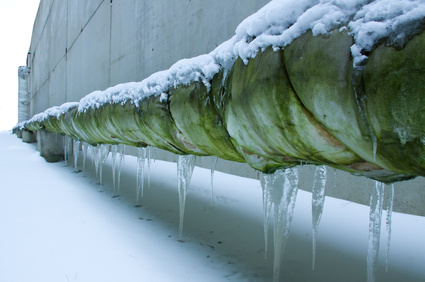
Whenever the temperature at your home or business is expected to drop below 32°F for longer than a few days, it is important to make sure your outside oil lines and heating tanks are well protected.
Oil will not freeze, but tanks and oil lines that are located outside a home or in an unheated space could freeze and lose their heat. The main reason for this is, the oil in the lines will get cloudy and then become gelled or waxed, preventing it from flowing. When this happens, you will lose your heat.
There are a few steps you can take to make sure you are prepared for a prolonged cold spell. Start by adding a fuel oil treatment to help prevent the oil from gelling or waxing. After adding a fuel oil treatment, the simplest and least expensive solution is to insulate the piping and fittings at the tank with pipe insulation and a strong tape, like duct tape. This step will need to be done before a problem occurs and the tank freezes, but is an easy way to winterize your tank before the cold snap hits.
Protecting your tank and the oil lines from freezing may be accomplished by wrapping the exposed areas in insulation and heat tape. Should the lines already be frozen, you will need to thaw them with sustained heat until they begin flowing again—then apply the insulation and tape. Follow the instructions carefully or call a Drain King professional technician to avoid overheating the pipes.
We also recommend using only a single line extending from the tank that stores the oil rather than a two-pipe system. The single oil line will keep the oil warmer and will have less time away from the heat exchange.
Another option for an outside tank is to use kerosene instead of heating oil. Kerosene will store at colder temperatures and will not need any additives or treatments to keep the lines from clogging. This is a headache-free solution. While kerosene is more expensive, it may be a more suitable option if you live in a region where it stays cold for long periods of time and if building a shed or protecting the unit from the elements is not an option.
Search Our Resources
DRAIN KING, INC.
Toll Free: 888-391-6241
Office: 763-786-3000
Fax: 763-571-7738