Ice dams in Minnesota

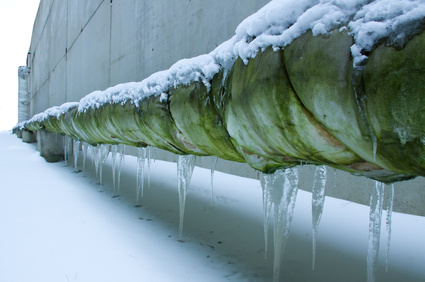
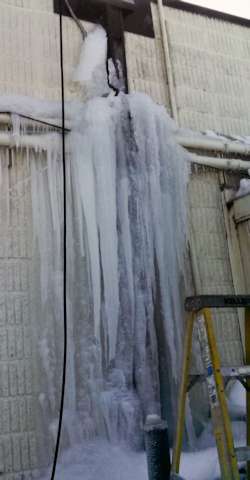
Ice dams usually show up on pitched roofs after snow starts melting and refreezing at the edge. I also see them on flat roof buildings when overflow drains send water over the side and that discharge freezes up. Once the ice builds, water gets trapped behind it. From there, it can work its way into the roof system and leak into the building.

That’s where the real trouble starts. Ceiling damage, wet insulation, stained walls, ruined inventory, and slippery entry areas can all follow if the water has nowhere to drain.
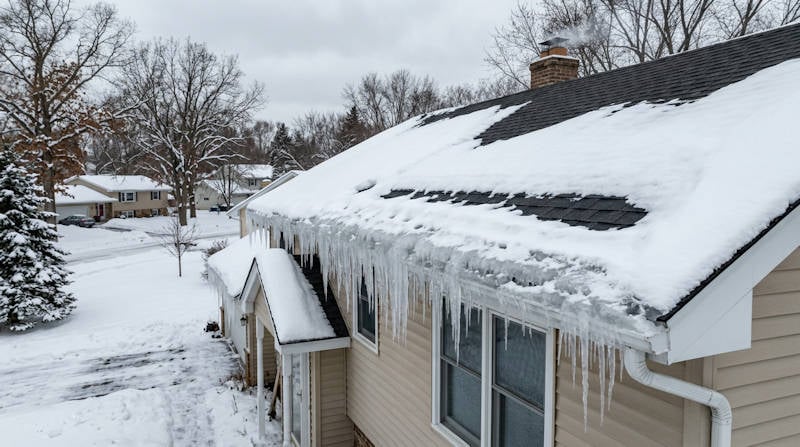
A house with a snow-covered roof and large icicles hinting at possible ice dams hanging from the eaves on a cloudy winter day; snow blankets the yard and surrounding neighborhood.

Ice Dam Removal on Commercial Property

Removing ice dams takes some care. I don’t treat it like a chopping job, because that’s how roofs get torn up. Hacking at ice with shovels, bars, or other tools can damage roofing material, flashing, and drain areas fast. I’ve seen more harm done by rough removal than by the ice itself.

I remove ice dams using hot water at low pressure. That lets me melt the ice down without beating up the roof or wall surface. It’s a slower method than smashing at it, but it’s the right one. The goal is to open the drainage path and get rid of the dam without creating a repair bill in the process.

Why Ice Dams Need Attention

Once water starts pooling behind an ice dam, it doesn’t just sit there harmlessly. It looks for a way in. On commercial buildings, that can mean leaks into offices, hallways, storage areas, or tenant spaces. In winter, those leaks also tend to show up at the worst time, usually during a thaw or after another round of snow.

A lot of property owners wait too long because the ice is visible but the water damage isn’t. By the time stains show up indoors, the roof has already been taking on water.

Preventing Ice Dams

One of the better ways to prevent ice dams is heat tape installed along lower roof sections or around overflow drains. I’ve found that this helps keep problem areas open so snow and meltwater don’t keep freezing in the same spot.

The heat tape runs at low temperatures and helps stop snow accumulation from building into a solid blockage. It’s especially useful in areas where drainage is already slow or where roof edges tend to freeze first.

Common Problems I See

The biggest mistake is trying to break the ice loose by force. That can damage the roof membrane, loosen components, and turn a drainage problem into a roof repair. Another common issue is ignoring overflow drain areas until they’re fully frozen over. Once that happens, water has fewer places to go, and the risk of interior leakage goes up.

Timing matters too. If the dam is dealt with early, the job is usually more straightforward. If it’s been building for days or weeks, removal takes longer and the chance of hidden water intrusion is higher.
Frozen Drain Lines? Here’s What to Do Before Calling for Emergency Service


If your sinks are draining slow or not at all and you suspect frozen drain lines, don’t panic. It’s a headache, for sure, but there’s a good chance you can tackle the issue before needing emergency help. Here’s what I recommend if you’ve got frozen drains and you want to fix things fast (and safely).

First Step: Check and Prep

So, you think something’s frozen inside your drains. The best way to start is a little detective work:

  • Turn up the heat: Raise the temperature in your home. Heat helps thaw frozen pipes and lines from the inside out.
  • Open doors and cabinets: If you’ve got drains running behind cabinets or in closets, swing open those doors. Letting warmer air reach the pipes can make a difference.
  • Look and listen for trouble: Peek around for water spots on walls or ceilings. Listen for dripping or weird gurgling. If you spot obvious leaks or standing water, halt the DIY and move on to seeking help from your drain service experts.
  • Stay safe and tidy: Lay down towels under affected areas just in case things start to thaw and get messy.

Try the Hot Water and Salt Trick

Here’s a classic that’s safe for most drains (and feels a little like magic):

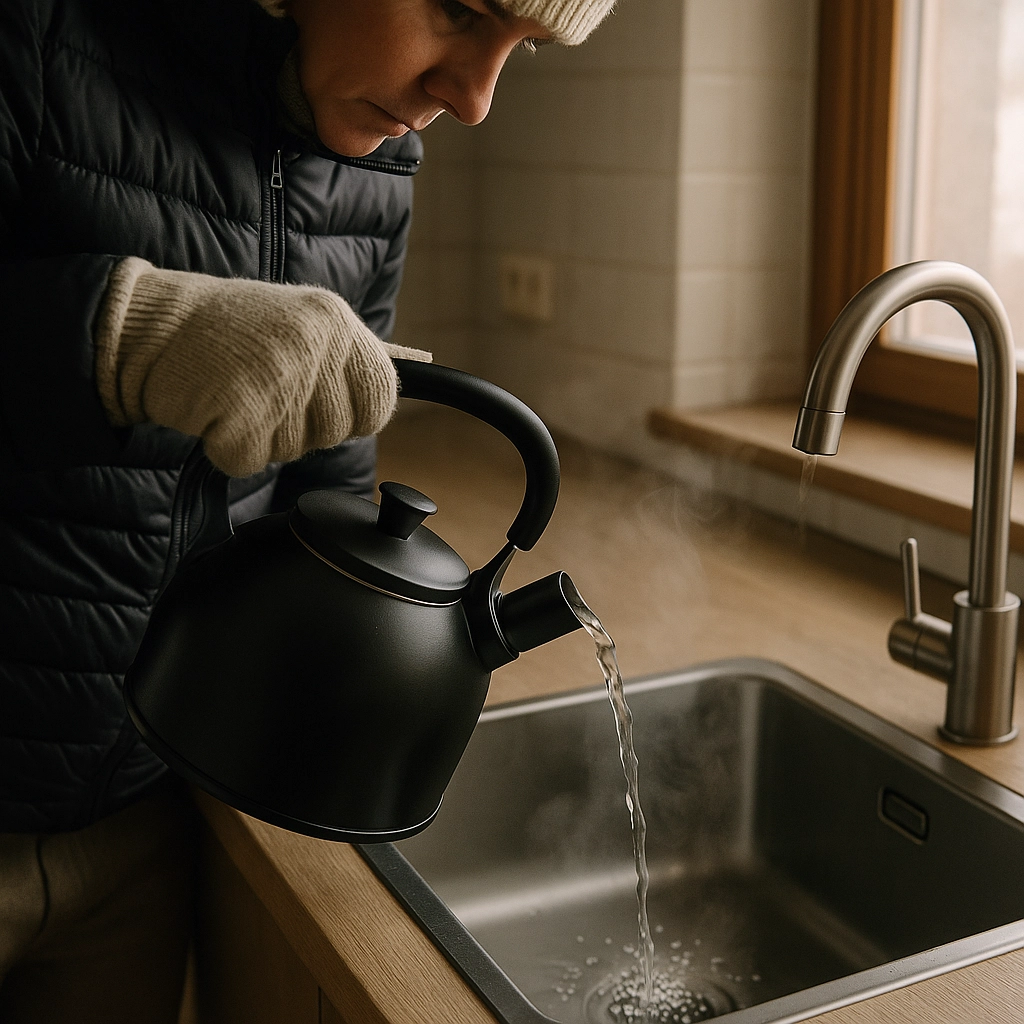
  1. Heat some water: Boil a full kettle, then let it cool for about a minute to avoid pouring boiling water directly down the drain (super high heat can sometimes shock certain pipe materials).
  2. Add salt: Stir in a generous cup of kosher salt. Salt lowers the freezing point, helping break up ice.
  3. Pour steadily: Tip your salt-water mixture slowly down the frozen drain.
  4. Repeat: Give it a few minutes, then try again. Sometimes it takes a couple of rounds.

You’ll need a bit of patience here. If the clog is stubborn, keep at it, but don’t force it.

Wearing gloves, a person pours hot water from a black kettle into a kitchen sink near a faucet—steam rising from the water—a common step in what to do when dealing with frozen drain lines before calling emergency service.

Warming Things Up: Heat Methods That Work

If you can get access to the actual line—like those under a sink, or in the basement—these gentle heat approaches can help:

Wrap with Hot Towels

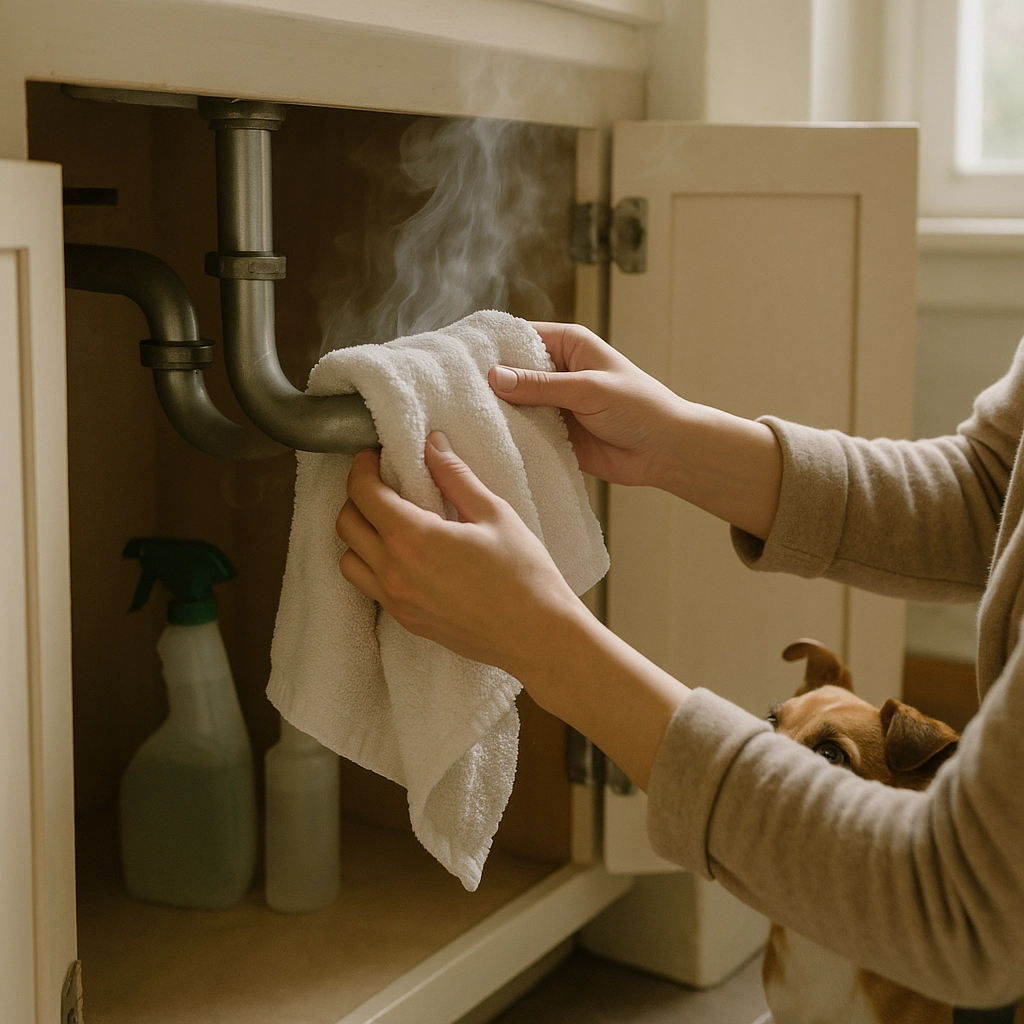
Soak a couple of towels in hot water, wring them out a bit, then wrap them around the frozen section of the line. Re-wet with hot water as needed. This works best with easy-to-reach, exposed drains and keeps things safe.

Use a Heat Lamp

If your frozen line is in a crawl space or basement, try a heat lamp. Aim it right at the problem spot—but remember, don’t leave it unattended. Heat lamps work slowly, but steadily, and can be a good way to loosen stubborn ice.

Try a Heat Cable

Got a freeze that keeps coming back every winter? Consider heat cables (sometimes called heat tape). You wrap these right around the exterior of the pipe, plug them in, and let them do the warming for you. It’s smart to read the directions closely. And if you’ve never used one before, get advice from someone who has.

A person holds a steaming cloth on a pipe under a sink, trying what to do for frozen drain lines. Cleaning supplies are nearby, and a dog looks on.

Whatever You Do, Stay Safe

When you’re dealing with frozen drain lines, you don’t want to take risks. Here are a few big “don’ts” that I always share:

  • No open flames: Blowtorches, lighters, or any open flames are never a good idea near pipes. Fires and even pipe damage can result.
  • Don’t go wild with force: Avoid banging on or over-heating any pipes. Sudden temperature changes can create cracks or cause old pipes to burst, making the problem way worse.
  • Handle electricity with care: If you try a heat cable or lamp, check there’s no water nearby and always plug things into a GFCI-protected outlet.

If you don’t know exactly where the freeze is happening or things just aren’t working, play it safe. Sometimes what seems like a minor issue is hiding a bigger one.

Keeping Things from Freezing Again

Once you’ve thawed your lines (or while you’re waiting for them to open up), try a few quick prevention steps to help you save hassle this winter:

  • Keep the heat up: Don’t let your house dip too low overnight, especially if temperatures outside drop fast.
  • Open up the airflow: In extra-cold snaps, leave cabinet doors open under sinks and let warm air circulate.
  • Drip taps during cold waves: A slow, steady drip helps keep water moving and less likely to freeze up tight.
  • Seal drafts: Check for cold air sneaking in near exterior walls and around pipe exits; a little weather-stripping or insulation goes a long way.

When to Call the Drain Pros

DIY can fix a lot, but there are clear times to call for help:

  • There’s visible leaking, serious water pressure drops, or you suspect a burst.
  • You absolutely can’t find the frozen spot, even after checking obvious spots near exterior walls.
  • After an hour or so of trying the above methods, there’s zero improvement.

Drain service experts have tools like video inspection to spot exactly where the freeze is. Some use special steam-blasting machines to safely thaw deep or buried lines—these aren’t available for home use but will quickly solve the ice problem and get your drains flowing again.

If disaster strikes and you see leaks: turn off your main water or drain shutoff valve and get on the horn with your local drain team. That’s what we’re here for!

How To Thaw Frozen Pipes Underground

How to Clear a Frozen Sewer Line in Minneapolis Using Hot Water Jetting

Minnesota winters are no joke. When temperatures drop well below freezing, underground sewer lines and drain pipes can freeze solid, stopping water flow and creating serious problems for homes and commercial properties alike. If you are dealing with a frozen sewer or drain pipe, you may be asking yourself, “How do I thaw a frozen sewer line safely and effectively?”

In the video below Drain King Inc demonstrates exactly how frozen sewer and drain lines are cleared using professional hot water jetting equipment. This method allows frozen pipes to be thawed quickly, safely, and completely, without damaging the pipe.

Drain King Inc can clear any frozen sewer or drain line from 1 inch in diameter all the way up to 36 inches, serving residential, commercial, and industrial systems throughout Minneapolis and the entire state of Minnesota.


How To Thaw Frozen Pipes Underground

Why Sewer and Drain Pipes Freeze in Minnesota

Frozen sewer and drain lines are common in Minneapolis and across Minnesota due to extreme winter conditions. Pipes can freeze for several reasons, including:

  • Prolonged subzero temperatures

  • Shallow or poorly insulated pipe depth

  • Standing water inside the pipe

  • Improper slope that allows water to sit

  • Older sewer systems or aging infrastructure

Commercial properties are especially vulnerable because they often have long pipe runs, wide-diameter lines, and exterior drains exposed to cold air.

When water freezes inside a pipe, it expands. This can completely block flow and, in some cases, crack or damage the pipe if not handled properly.


Why DIY Thawing Methods Often Fail

Many property owners attempt to thaw frozen sewer lines themselves using space heaters, torches, or chemical solutions. These methods are risky and frequently ineffective.

DIY thawing can lead to:

  • Cracked or collapsed pipes

  • Fire hazards

  • Partial thawing that quickly refreezes

  • Damage to surrounding soil or infrastructure

Frozen sewer lines require controlled heat, pressure, and experience to clear them safely. That is why professional hot water jetting is the preferred solution.


How Hot Water Jetting Clears Frozen Sewer Lines

Hot water jetting is one of the most effective methods for clearing frozen sewer and drain pipes. In the demonstration video, Drain King Inc uses a professional-grade hot water jetting unit operating at 4 gallons per minute and up to 4,000 PSI.

Water temperatures typically range between 120° and 180°, allowing the ice to melt rapidly without damaging the pipe.

The jetting nozzle is designed with:

  • Forward jets that melt ice ahead of the nozzle

  • Rear jets that wash away ice and debris as the hose advances

This creates a clear path through the frozen pipe, restoring full flow quickly and efficiently.


Pipe Sizes and Systems We Can Clear

Drain King Inc has the equipment and experience to clear frozen pipes across a wide range of applications, including:

  • Frozen water supply lines

  • Frozen sanitary sewer lines

  • Frozen storm drains

  • Frozen parking lot drains

  • Frozen commercial roof drains

From small residential lines to large commercial and municipal systems, Drain King Inc can clear frozen pipes from 1 inch up to 36 inches in diameter.


Residential and Commercial Frozen Pipe Solutions

Frozen sewer lines do not just affect homes. Businesses, apartment complexes, warehouses, and retail properties can experience severe downtime when drains freeze.

Hot water jetting is ideal for:

  • Residential sewer and drain lines

  • Commercial buildings

  • Parking ramps and lots

  • Industrial facilities

  • Roof drainage systems

Because hot water jetting fully clears the pipe, it reduces the risk of refreezing compared to partial thawing methods.


Serving Minneapolis and All of Minnesota

Drain King Inc not only serves the entire Minneapolis–St. Paul metro area we also serve the entire state of Minnesota! If you are dealing with a frozen sewer line, frozen drain pipe, or frozen commercial drain, professional help is available.

Watch the video above to see hot water jetting in action, then contact Drain King Inc today.

Looking for Ice Dam Removal? Click here to learn more about that service.

DRAIN KING INC.
YOUR SATISFACTION GUARANTEED!
7740 Beech St NE
Minneapolis, MN 55432
763-786-3000

Oil Line Freezing?

Frozen Pipeline

Whenever the temperature at your home or business is expected to drop below 32°F for longer than a few days, it is important to make sure your outside oil lines and heating tanks are well protected.

Oil will not freeze, but tanks and oil lines that are located outside a home or in an unheated space could freeze and lose their heat. The main reason for this is, the oil in the lines will get cloudy and then become gelled or waxed, preventing it from flowing. When this happens, you will lose your heat.

There are a few steps you can take to make sure you are prepared for a prolonged cold spell. Start by adding a fuel oil treatment to help prevent the oil from gelling or waxing. After adding a fuel oil treatment, the simplest and least expensive solution is to insulate the piping and fittings at the tank with pipe insulation and a strong tape, like duct tape. This step will need to be done before a problem occurs and the tank freezes, but is an easy way to winterize your tank before the cold snap hits.

Protecting your tank and the oil lines from freezing may be accomplished by wrapping the exposed areas in insulation and heat tape. Should the lines already be frozen, you will need to thaw them with sustained heat until they begin flowing again—then apply the insulation and tape. Follow the instructions carefully or call a Drain King professional technician to avoid overheating the pipes.

We also recommend using only a single line extending from the tank that stores the oil rather than a two-pipe system. The single oil line will keep the oil warmer and will have less time away from the heat exchange.

Another option for an outside tank is to use kerosene instead of heating oil. Kerosene will store at colder temperatures and will not need any additives or treatments to keep the lines from clogging. This is a headache-free solution.  While kerosene is more expensive, it may be a more suitable option if you live in a region where it stays cold for long periods of time and if building a shed or protecting the unit from the elements is not an option.

Winter Preparation for Your Drain Service

Ice Dam
Ice Dam on a commercial building

No homeowner wants to deal with frozen pipes in the middle of winter. They are messy and expensive to take care of, as well as inconvenient. Water expands as it freezes, causing tremendous pressure in whatever contains it. Sometimes the pressure is so great, it causes the container to burst. Luckily, there are steps you can take to protect your pipes and avoid the headache of fixing leaky drain service in freezing temperatures.

  • Drain water from garden hoses, sprinkler pipes and swimming pool supply lines, and store them indoors.
  • Check indoor pipes in unheated areas like basements, crawl spaces, attics and garages. When possible, insulate the pipes with UL-listed heat tape or pipe sleeves. Newspaper can also be used, although it offers less protection.
  • Have your home's exterior walls insulated. Make sure windows and doors are caulked and sealed to avoid drafts. Close attic and crawl space doors.
  • Keep warm air circulating around the pipes by leaving cabinet doors open under sinks in the kitchen and bathrooms.
  • If you're going to be away from home for an extended period of time, set the thermostat no lower than 55 degrees.
  • Make sure heat vents are open and unobstructed by furniture.
  • Change furnace filters regularly to ensure that heat will be distributed properly to all areas of your house.
  • Let a small amount of water trickle through the pipes that are in unheated spaces or outdoor walls. Running water doesn't freeze.

Know where the master shutoff valve is. It is almost always located near an outdoor water meter or indoor appliance (furnace, washing machine, water heater, etc.). Paint it a bright color so it is easily identifiable, and show each member of your family where it is and how to turn it off. Sometimes, no matter how many precautions are taken, the pipes still freeze. If a water line is broken, you may not notice a leak until the ice melts. That leak may manifest as a trickle or a gush, but it's best to know how to stop the flow of water before it turns into a flood.

Preventing Frozen Pipes

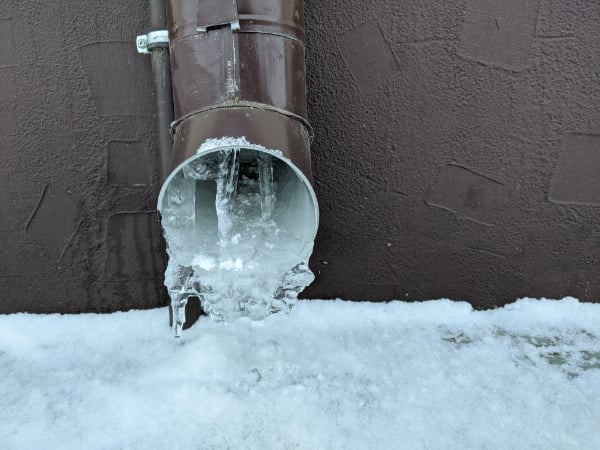
A brown metal drainpipe with icicles and ice buildup at the opening, attached to a textured wall above snow-covered ground—a clear reminder of the importance of preventing frozen pipes in winter.
Frozen pipe

As the crisp fall temperatures slowly give way to frigid winter weather, it's a good idea to think about your drain service, and how to keep your pipes from freezing. Frozen pipes are inconvenient, expensive to repair and can cause extensive damage to structures in a very short amount of time. With a little preparation, you can save yourself the headache of a major home maintenance disaster.

There are three main causes of frozen pipes: rapid drops in temperature, thermostats set too low and inadequate insulation. The good news is, these are easy to remedy. Before winter weather sets in, consider doing the following:

  • Seal leaks that allow cold air to enter the home. Even small bursts of cold air are enough to freeze a pipe. Wind chill is worse for pipes than cold temperatures. Look for drafts around electrical wiring, dryer vents, attics, crawl spaces and pipes, and then seal them with caulk or insulation.
  • Disconnect garden hoses for the winter. Drain the water from them and store before the first hard freeze. Water left in the hose or spigot can freeze, which puts pressure on indoor pipes as the ice expands. Use a faucet cover for extra protection. Don't forget to winterize your outdoor kitchen.
  • Even if you live in a climate where freezing temperatures are uncommon, insulate the pipes in your home's crawlspace, attic and basement. Exposed pipes are the most susceptible to freezing. Wrap them with heat tape or pipe sleeves specifically designed to insulate pipes and keep them from freezing. The more insulation that protects them, the less likely they'll be to freeze. Also, open cabinet doors in bathrooms and kitchens to let heat circulate around the pipes.
  • Keep the thermostat set at the same temperature day and night. If you turn it down while you sleep, the drop in indoor temperature, coupled with the cold outdoors, could trigger a freeze. The thermostat should never be set lower than 55 degrees, even if you are away from home for an extended period of time.

If you're still worried about your pipes freezing, you may want to think about running the hot and cold water at a trickle during the night, especially if the pipes are on an outside, less-insulated wall. It is difficult for running water to freeze, so by leaving the lines open and allowing consistent pressure release, the pipes are protected from rupture.

If you have further questions about protecting your pipes during winter, contact the drain service experts at Drain King.