
Ice dams usually show up on pitched roofs after snow starts melting and refreezing at the edge. I also see them on flat roof buildings when overflow drains send water over the side and that discharge freezes up. Once the ice builds, water gets trapped behind it. From there, it can work its way into the roof system and leak into the building.
That’s where the real trouble starts. Ceiling damage, wet insulation, stained walls, ruined inventory, and slippery entry areas can all follow if the water has nowhere to drain.
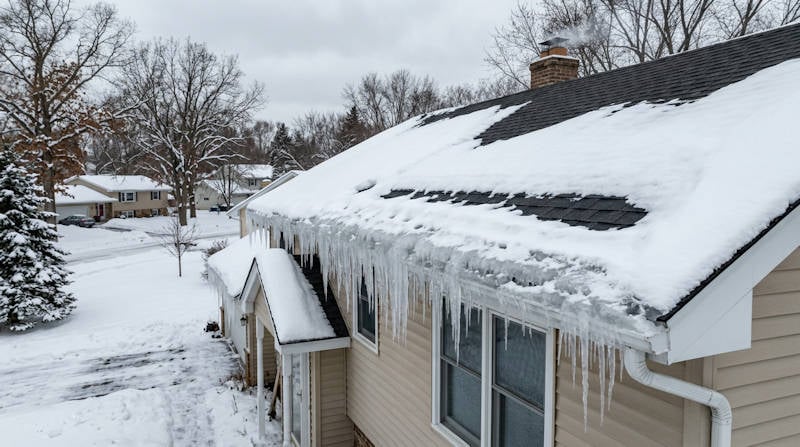
Ice Dam Removal on Commercial Property
Removing ice dams takes some care. I don’t treat it like a chopping job, because that’s how roofs get torn up. Hacking at ice with shovels, bars, or other tools can damage roofing material, flashing, and drain areas fast. I’ve seen more harm done by rough removal than by the ice itself.
I remove ice dams using hot water at low pressure. That lets me melt the ice down without beating up the roof or wall surface. It’s a slower method than smashing at it, but it’s the right one. The goal is to open the drainage path and get rid of the dam without creating a repair bill in the process.
Why Ice Dams Need Attention
Once water starts pooling behind an ice dam, it doesn’t just sit there harmlessly. It looks for a way in. On commercial buildings, that can mean leaks into offices, hallways, storage areas, or tenant spaces. In winter, those leaks also tend to show up at the worst time, usually during a thaw or after another round of snow.
A lot of property owners wait too long because the ice is visible but the water damage isn’t. By the time stains show up indoors, the roof has already been taking on water.
Preventing Ice Dams
One of the better ways to prevent ice dams is heat tape installed along lower roof sections or around overflow drains. I’ve found that this helps keep problem areas open so snow and meltwater don’t keep freezing in the same spot.
The heat tape runs at low temperatures and helps stop snow accumulation from building into a solid blockage. It’s especially useful in areas where drainage is already slow or where roof edges tend to freeze first.
Common Problems I See
The biggest mistake is trying to break the ice loose by force. That can damage the roof membrane, loosen components, and turn a drainage problem into a roof repair. Another common issue is ignoring overflow drain areas until they’re fully frozen over. Once that happens, water has fewer places to go, and the risk of interior leakage goes up.
Timing matters too. If the dam is dealt with early, the job is usually more straightforward. If it’s been building for days or weeks, removal takes longer and the chance of hidden water intrusion is higher.