Winters in Minnesota are hard on parking ramps. Between the snow, slush, sand, and road salt, a lot of material gets tracked in by every vehicle that enters the building. It builds up fast, especially around drains and in sand traps. I’ve seen ramps look fine on the surface while the drainage system underneath is already packed with debris.
All that wet snow collecting around wheel wells and rims has to go somewhere once it melts. The answer is usually your ramp drains and sand traps. Over the course of a winter, those systems can take on a surprising amount of sand, salt, and dirty runoff.
Why Annual Cleaning Matters
I recommend parking ramp drain cleaning on a yearly basis because neglect gets expensive. Salt is especially rough on cast iron piping. Over time, it can eat away at the pipe from the inside out. What starts as buildup can turn into rot, leaks, backups, and eventually major repairs.
That kind of damage doesn’t stay contained for long. A failed drain line or deteriorated sand trap can lead to flooding, vehicle damage, shutdowns, and cleanup costs that are far higher than routine maintenance. In a busy ramp, even a short disruption can become a headache.
Sand traps have their own problems too. If they aren’t pumped often enough, the accumulated material and salt deposits can wear them down. Once a tank starts leaking, you’re not just dealing with replacement. You may also be dealing with contaminated cleanup, disposal requirements, and a much bigger bill than expected.
What Builds Up in Ramp Drains
The main issue is the combination of sand and salt. Sand settles and packs into the system. Salt sits in the moisture and keeps working on metal and concrete surfaces. That mix is tough on drains, tough on traps, and tough on anything that’s been ignored for too long.
A lot of property managers assume the spring thaw clears things out. It doesn’t. Meltwater may move some material, but the heavier debris stays behind. Year after year, it stacks up.
How I Clean Parking Ramp Drains
I use high pressure water jetting to break up and remove sand and salt deposits from parking ramp drains. It’s one of the most effective ways to clear heavy buildup and restore flow without guessing at what’s still sitting in the line.
The waste is pushed from the top of the ramp down to the bottom, where it can be collected and removed properly. After jetting, the remaining waste is pumped out of the tank. Liquid waste is disposed of at Met Council, and the sand is taken to a local landfill.
Low Clearance Ramps Are Not a Problem
Low clearance ramps can make routine maintenance harder, but they don’t have to stop the job from getting done. My vac trailer can access sand traps in most low clearance ramps, which makes it possible to clean and pump systems that other equipment may struggle to reach.
That matters more than people think. Some of the worst buildup happens in ramps where access is tight and maintenance gets delayed because it feels inconvenient.
What to Expect From Regular Service
A minimum of once per year is a good baseline for most parking ramps. In heavier-use properties, or in ramps that see a lot of winter traffic, more frequent service may make sense. The right schedule usually depends on traffic volume, how much sand and salt gets tracked in, and how quickly the trap fills.
Regular cleaning helps extend the life of your drains, protect the sand trap, and reduce the risk of backups, leaks, and avoidable repair costs. It’s simple maintenance, but it prevents the kind of problems that are anything but simple once they start.
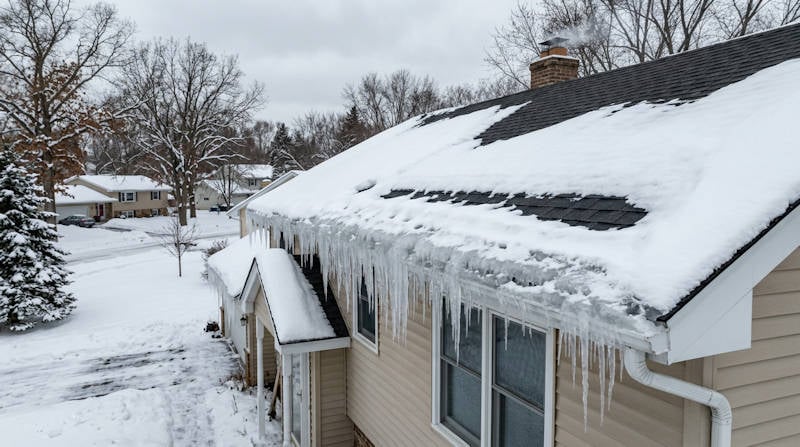
Ice dams usually show up on pitched roofs after snow starts melting and refreezing at the edge. I also see them on flat roof buildings when overflow drains send water over the side and that discharge freezes up. Once the ice builds, water gets trapped behind it. From there, it can work its way into the roof system and leak into the building.
That’s where the real trouble starts. Ceiling damage, wet insulation, stained walls, ruined inventory, and slippery entry areas can all follow if the water has nowhere to drain.
Ice Dam Removal on Commercial Property
Removing ice dams takes some care. I don’t treat it like a chopping job, because that’s how roofs get torn up. Hacking at ice with shovels, bars, or other tools can damage roofing material, flashing, and drain areas fast. I’ve seen more harm done by rough removal than by the ice itself.
I remove ice dams using hot water at low pressure. That lets me melt the ice down without beating up the roof or wall surface. It’s a slower method than smashing at it, but it’s the right one. The goal is to open the drainage path and get rid of the dam without creating a repair bill in the process.
Why Ice Dams Need Attention
Once water starts pooling behind an ice dam, it doesn’t just sit there harmlessly. It looks for a way in. On commercial buildings, that can mean leaks into offices, hallways, storage areas, or tenant spaces. In winter, those leaks also tend to show up at the worst time, usually during a thaw or after another round of snow.
A lot of property owners wait too long because the ice is visible but the water damage isn’t. By the time stains show up indoors, the roof has already been taking on water.
Preventing Ice Dams
One of the better ways to prevent ice dams is heat tape installed along lower roof sections or around overflow drains. I’ve found that this helps keep problem areas open so snow and meltwater don’t keep freezing in the same spot.
The heat tape runs at low temperatures and helps stop snow accumulation from building into a solid blockage. It’s especially useful in areas where drainage is already slow or where roof edges tend to freeze first.
Common Problems I See
The biggest mistake is trying to break the ice loose by force. That can damage the roof membrane, loosen components, and turn a drainage problem into a roof repair. Another common issue is ignoring overflow drain areas until they’re fully frozen over. Once that happens, water has fewer places to go, and the risk of interior leakage goes up.
Timing matters too. If the dam is dealt with early, the job is usually more straightforward. If it’s been building for days or weeks, removal takes longer and the chance of hidden water intrusion is higher.
If you run (or manage) a parking garage, auto repair shop, service station, car wash, warehouse, or industrial facility, you’ve got a not-so-secret hero working under your floor: the sand trap. It’s not flashy, it’s not fun, and it definitely doesn’t get a thank-you card—until it overflows and suddenly everyone has opinions.
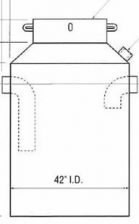
In the world of commercial services, a sand trap (also called a grit interceptor) is a critical tank designed to keep sand, silt, oil, and chemical-laced runoff from heading straight into the city sewer. Ignore it long enough and you’re not just dealing with a messy drain problem—you’re risking backups, fines, and a tank that wears out way sooner than it should.
Let’s get into what these traps do, where they show up, and why annual pump-outs are the simplest “set it and forget it” move you can make for your facility.
Where You’ll Find Sand Traps (a.k.a. The Usual Suspects)
Most sand traps are out of sight and easy to forget—until they’re full. I typically see them at:
Parking Garages: Constant runoff, especially in winter. Road sand and salt add up fast.
Auto Repair Shops & Service Bays: Oils, fluids, wash-down water, and debris are a daily thing.
Commercial Car Washes: Mud and grit have to go somewhere, and it shouldn’t be your sewer line.
Industrial & Warehouse Facilities: Floor drains + heavy use = a steady diet of sediment and solids.
If your building has floor drains and vehicle traffic, odds are good a sand trap is part of your drain system (even if nobody remembers where the lid is).
Annual Pumping: The Simple Rule That Prevents Expensive Problems
Here’s my “write it on the calendar” advice: pump your sand trap out at least once a year. Not “when it starts acting up.” Not “when someone complains.” Annually.
Why? Because sand traps are basically storage tanks for the stuff you don’t want in your lines. Once they reach capacity, the trap stops trapping. Sand and grit rush through, settle in your laterals, and start building a compacted, abrasive mess that’s far harder (and pricier) to remove later.
Regular routine maintenance keeps the system doing what it’s designed to do: protect your lines, protect the city sewer, and help you avoid emergency downtime.
Why This Matters to the City Sewer (and to Your Tank)
A full sand trap doesn’t just become your problem—it becomes the city’s problem. When oil, chemicals, and heavy solids escape into the municipal system, that can trigger compliance issues and very expensive conversations.
On your side of the line, there’s another big reason to stay ahead of it: sand is abrasive. Left sitting and swirling in the tank, grit can wear down the tank’s interior and stress connected piping over time. Annual pump-outs help prolong the life of the tank and reduce the chances of major repair or replacement.
In other words: keeping the trap clean is cheaper than rebuilding what a neglected trap destroys.
Signs Your Sand Trap Is Overdue (Yes, It Has a “Tell”)
Not sure when it was last serviced? Here are the usual hints:
Slow or gurgling floor drains: The system is struggling to move water.
Oil/chemical odors: The tank is holding more than it should, for longer than it should.
Standing water around drains: Backup behavior that doesn’t fix itself.
Visible sand/debris near the top: That’s the “we should’ve done this months ago” sign.
Minnesota Winter Makes Sand Traps Work Overtime
If you’re in the Minneapolis–St. Paul area, you already know winter is basically a grit delivery service. Road sand, salt, slush, and melting snowmelt all head toward your drains—and your sand trap has to catch it.
Getting a pump-out on the schedule (late fall or early spring is popular) helps keep drains moving when temperatures drop and runoff spikes. It’s one of those boring maintenance items that saves you from the very un-boring experience of a mid-winter backup.
Keep the Grit Where It Belongs
A sand trap is like a bouncer for your drain system: it’s there to stop the wrong stuff from getting in. But even the best bouncer needs a break once in a while.
Annual sand trap pumping protects the city sewer from oil and chemicals, helps your drains run cleaner, and can seriously extend the life of the tank. And if something goes sideways, I’m here with expert technicians and 24/7 service to get you back in business without the drama.
Keep your grit in the trap and your water in the pipes. Your facility (and the city sewer department) will thank you.
How to Clear a Frozen Sewer Line in Minneapolis Using Hot Water Jetting
Minnesota winters are no joke. When temperatures drop well below freezing, underground sewer lines and drain pipes can freeze solid, stopping water flow and creating serious problems for homes and commercial properties alike. If you are dealing with a frozen sewer or drain pipe, you may be asking yourself, “How do I thaw a frozen sewer line safely and effectively?”
In the video below Drain King Inc demonstrates exactly how frozen sewer and drain lines are cleared using professional hot water jetting equipment. This method allows frozen pipes to be thawed quickly, safely, and completely, without damaging the pipe.
Drain King Inc can clear any frozen sewer or drain line from 1 inch in diameter all the way up to 36 inches, serving residential, commercial, and industrial systems throughout Minneapolis and the entire state of Minnesota.
How To Thaw Frozen Pipes Underground
Why Sewer and Drain Pipes Freeze in Minnesota
Frozen sewer and drain lines are common in Minneapolis and across Minnesota due to extreme winter conditions. Pipes can freeze for several reasons, including:
Prolonged subzero temperatures
Shallow or poorly insulated pipe depth
Standing water inside the pipe
Improper slope that allows water to sit
Older sewer systems or aging infrastructure
Commercial properties are especially vulnerable because they often have long pipe runs, wide-diameter lines, and exterior drains exposed to cold air.
When water freezes inside a pipe, it expands. This can completely block flow and, in some cases, crack or damage the pipe if not handled properly.
Why DIY Thawing Methods Often Fail
Many property owners attempt to thaw frozen sewer lines themselves using space heaters, torches, or chemical solutions. These methods are risky and frequently ineffective.
DIY thawing can lead to:
Cracked or collapsed pipes
Fire hazards
Partial thawing that quickly refreezes
Damage to surrounding soil or infrastructure
Frozen sewer lines require controlled heat, pressure, and experience to clear them safely. That is why professional hot water jetting is the preferred solution.
How Hot Water Jetting Clears Frozen Sewer Lines
Hot water jetting is one of the most effective methods for clearing frozen sewer and drain pipes. In the demonstration video, Drain King Inc uses a professional-grade hot water jetting unit operating at 4 gallons per minute and up to 4,000 PSI.
Water temperatures typically range between 120° and 180°, allowing the ice to melt rapidly without damaging the pipe.
The jetting nozzle is designed with:
Forward jets that melt ice ahead of the nozzle
Rear jets that wash away ice and debris as the hose advances
This creates a clear path through the frozen pipe, restoring full flow quickly and efficiently.
Pipe Sizes and Systems We Can Clear
Drain King Inc has the equipment and experience to clear frozen pipes across a wide range of applications, including:
Frozen water supply lines
Frozen sanitary sewer lines
Frozen storm drains
Frozen parking lot drains
Frozen commercial roof drains
From small residential lines to large commercial and municipal systems, Drain King Inc can clear frozen pipes from 1 inch up to 36 inches in diameter.
Residential and Commercial Frozen Pipe Solutions
Frozen sewer lines do not just affect homes. Businesses, apartment complexes, warehouses, and retail properties can experience severe downtime when drains freeze.
Hot water jetting is ideal for:
Residential sewer and drain lines
Commercial buildings
Parking ramps and lots
Industrial facilities
Roof drainage systems
Because hot water jetting fully clears the pipe, it reduces the risk of refreezing compared to partial thawing methods.
Serving Minneapolis and All of Minnesota
Drain King Inc not only serves the entire Minneapolis–St. Paul metro area we also serve the entire state of Minnesota! If you are dealing with a frozen sewer line, frozen drain pipe, or frozen commercial drain, professional help is available.
Watch the video above to see hot water jetting in action, then contact Drain King Inc today.
Looking for Ice Dam Removal? Click here to learn more about that service.
DRAIN KING INC. YOUR SATISFACTION GUARANTEED!
7740 Beech St NE
Minneapolis, MN 55432
Things happen and drains get clogged, usually it is nobody’s fault. Pipes also have a tendency to clog more frequently when they are not used regularly, using a pipe only occasionally will allow the contents to settle and sometimes will create a clog. Pipes aren’t normally blocked with frequent use, as they are designed to handle high volumes. There are periods when they will slow to the point that water can hardly go through.
What should you do when this happens? When your pipes get clogged, employ a drain-cleaning technician quick! Yes, there are DIY solutions you can try before contacting a professional, but why risk making a costly mistake?
There are items that can be used as a fast fix, but the remedy they offer is generally short-term. You can reduce the blockage, but there’s still a chance you’ll experience it again. This is why it’s better to call in a drain-cleaning technician get rid of the obstructions completely. Aside from eliminating the clog, a professional technician will also make sure that the pipes are in good working order.
You don’t have to fear spending more than what you would would likely spend on home remedies; the price is really worth it. One big benefit of asking a professional to empty your pipes is having the right resources to do it securely and mess-free. How many times have you seen DIY block elimination gone badly? You simply can’t risk damaging other items in your kitchen due to poor cleaning techniques. Drain Service technicians are prepared to deal with these circumstances, so it’s always a good idea to rely on a professional.