There's no single number that applies to every septic system, even though it's tempting to want one. The right pumping interval depends on a handful of factors specific to each property: tank size, household size, and how much wastewater the system handles on an average week.
A larger household naturally sends more water and waste through the system, which means the solids that settle in the tank build up faster than they would in a smaller home with the same size tank. Garbage disposals add to that load too, since they send more solid material into the tank than a household without one.
Rather than tracking a strict calendar, it helps to know the warning signs that a tank is falling behind schedule: drains that are slower throughout the house, gurgling sounds, odors near the tank or drain field, or standing water in the yard above the tank. Any of those is worth a look regardless of how recently the tank was last pumped.
For most households, working with a service provider to establish a baseline interval based on actual tank size and usage, then adjusting from there, beats guessing at a generic schedule.
For those who live outside the city and have a septic system, it is important to take proper care of your septic tank. If it is maintained properly, you will have minimal problems and will save money on repairs in the future.
When planning landscaping, gutters, and foundation drains, it is essential to make certain rainwater is diverted so the septic tank and drain field don’t become overloaded. A drain field that has collected excess water will not be able to absorb and neutralize liquid waste. Keep trees about 100 feet away from the septic system, so they don’t damage it. Trees like willows have an aggressive root system and need to be planted even further away. Vehicles must not be driven on, or parked on top of the septic tank. Neither should any structure, concrete, or asphalt cover the tank. Large farm animals must also be kept away. The weight any of these would add can damage it.
Inside your home, make sure faucets and toilets don’t leak, use aerators and low flow nozzles on faucets and showers to help with lowering water usage, use the right setting for small loads of laundry, run the dishwasher when full, and install a displacer on your toilet to reduce the amount of water used.
Only use toilet paper in your toilet. Things like cat litter, disposable diapers, sanitary napkins and tampons, paper towels, tissues, and cigarette butts will quickly clog your septic tank.
If you have a garbage disposal, make sure it can grind food into tiny particles that are easier for your septic system to break down. A lower quality disposal can increase the amount of solids waste that empties into your tank. Never pour grease down the drain. It can cause clogs and make it difficult for liquids to be absorbed by the soil.
Use of heavy cleaners will kill the good bacteria in the septic tank, which can hinder the breakdown of solids. It is also important to properly dispose of varnish, paint thinners, motor oil, gasoline, and other similar chemicals. If poured down the drain, they can ruin your septic system and get into the groundwater.
Regular maintenance, cleaning, and inspecting should be performed by a licensed contractor like the professionals at Drain King. Our technicians are experienced in emptying septic tanks and have the permits needed to collect and dispose of waste. Solids need to be pumped from the tank every 3-5 years. This can vary depending on the size of the tank, the number of people residing in the home, and whether what is allowed into the tank is controlled. The baffles inside the tank should be inspected when it is emptied to make sure the waste is being properly dispersed within the tank and no solid waste is getting into the field lines. If the baffles are damaged, major—costly—problems can quickly develop.
A septic system is a catch basin for all the solid and liquid waste that is collected from a home’s drains and toilets. Each time you wash your hands at the bathroom sink, wash dishes in your kitchen sink, take a shower, or flush the toilet, wastewater drains from your house into a tank that makes up a septic system. For houses that are not serviced by public sewers, homeowners must install a septic system to trap, treat, and dispose of wastewater.
Septic systems must be well-maintained in order to function properly and to provide reliable service for years to come. Poorly functioning systems can cause property damage, pollution, and even disease. Though a significant financial investment, a well-constructed system is a necessity for any homeowner or property owner, especially if he plans to sell his home in the future.
Main Parts of a Septic System
A typical septic system consists of three parts.
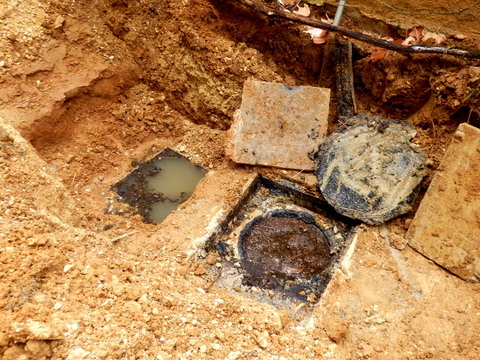
The tank or septic tankIn a typical home, a septic tank may be constructed of concrete or steel and can hold about 1,000 gallons of water. It is buried near the home, and wastewater drains into and collects within it. There are three layers in a typical septic tank. The first is the scum layer, composed of anything that floats. The bottom layer is called the sludge layer, where waste that is heavier than water sinks. The middle layer may look fairly clear, but this is where bacteria and toxic chemicals reside.
The drainfieldThe liquid or middle layer of the septic tank contents flow to the drainfield. As new wastewater enters the septic tank from the house, old water is released through a series of perforated pipes that are typically 4 inches in diameter. These pipes are buried in a trench 4 to 6 feet deep and filled with gravel.
The soilThe drainfield drains into soil below. Wastewater that drains into the soil is treated by microorganisms then seeps through the ground and into surface water. The soil must be made of an even mixture of clay and gravel in order to treat wastewater effectively.
Putting it all Together
As wastewater leaves the sink, toilet, or shower stall, it passes through a series of pipes that drain to the septic tank. This wastewater flows into the tank and forces the water that has been collected there out into the drainfield. Feces flushed from the toilet will sink in the tank, while the liquid part will drain into the drainfield. Gravity pretty much does all the work in a typical sewage system. Toxic gases are released, as organic material is broken down. These gases pass from the tank through a vent pipe that reaches up to the roof of a house.
Septic-tank maintenance includes collecting the sludge that has accumulated in the bottom of the tank and checking on the function of the drain field pipes and pipes that run from the home’s drains to the septic tank. A professional contractor should do this periodically.
Search Our Resources
DRAIN KING, INC.
Toll Free: 888-391-6241
Office: 763-786-3000
Fax: 763-571-7738