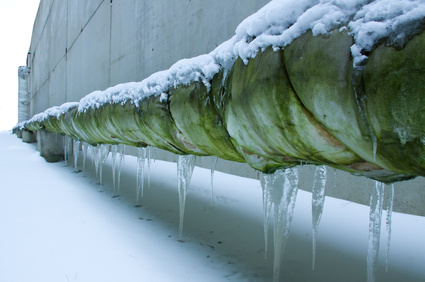
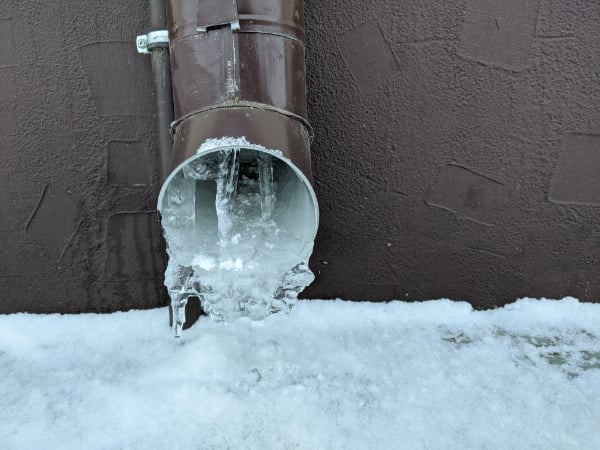
Whenever the temperature at your home or business is expected to drop below 32°F for longer than a few days, it is important to make sure your outside oil lines and heating tanks are well protected.
Oil will not freeze, but tanks and oil lines that are located outside a home or in an unheated space could freeze and lose their heat. The main reason for this is, the oil in the lines will get cloudy and then become gelled or waxed, preventing it from flowing. When this happens, you will lose your heat.
There are a few steps you can take to make sure you are prepared for a prolonged cold spell. Start by adding a fuel oil treatment to help prevent the oil from gelling or waxing. After adding a fuel oil treatment, the simplest and least expensive solution is to insulate the piping and fittings at the tank with pipe insulation and a strong tape, like duct tape. This step will need to be done before a problem occurs and the tank freezes, but is an easy way to winterize your tank before the cold snap hits.
Protecting your tank and the oil lines from freezing may be accomplished by wrapping the exposed areas in insulation and heat tape. Should the lines already be frozen, you will need to thaw them with sustained heat until they begin flowing again—then apply the insulation and tape. Follow the instructions carefully or call a Drain King professional plumber to avoid overheating the pipes.
We also recommend using only a single line extending from the tank that stores the oil rather than a two-pipe system. The single oil line will keep the oil warmer and will have less time away from the heat exchange.
Another option for an outside tank is to use kerosene instead of heating oil. Kerosene will store at colder temperatures and will not need any additives or treatments to keep the lines from clogging. This is a headache-free solution. While kerosene is more expensive, it may be a more suitable option if you live in a region where it stays cold for long periods of time and if building a shed or protecting the unit from the elements is not an option.
As the crisp fall temperatures slowly give way to frigid winter weather, it's a good idea to think about your plumbing, and how to keep your pipes from freezing. Frozen pipes are inconvenient, expensive to repair and can cause extensive damage to structures in a very short amount of time. With a little preparation, you can save yourself the headache of a major home maintenance disaster.
There are three main causes of frozen pipes: rapid drops in temperature, thermostats set too low and inadequate insulation. The good news is, these are easy to remedy. Before winter weather sets in, consider doing the following:
Seal leaks that allow cold air to enter the home. Even small bursts of cold air are enough to freeze a pipe. Wind chill is worse for pipes than cold temperatures. Look for drafts around electrical wiring, dryer vents, attics, crawl spaces and pipes, and then seal them with caulk or insulation.
Disconnect garden hoses for the winter. Drain the water from them and store before the first hard freeze. Water left in the hose or spigot can freeze, which puts pressure on indoor pipes as the ice expands. Use a faucet cover for extra protection. Don't forget to winterize your outdoor kitchen.
Even if you live in a climate where freezing temperatures are uncommon, insulate the pipes in your home's crawlspace, attic and basement. Exposed pipes are the most susceptible to freezing. Wrap them with heat tape or pipe sleeves specifically designed to insulate pipes and keep them from freezing. The more insulation that protects them, the less likely they'll be to freeze. Also, open cabinet doors in bathrooms and kitchens to let heat circulate around the pipes.
Keep the thermostat set at the same temperature day and night. If you turn it down while you sleep, the drop in indoor temperature, coupled with the cold outdoors, could trigger a freeze. The thermostat should never be set lower than 55 degrees, even if you are away from home for an extended period of time.
If you're still worried about your pipes freezing, you may want to think about running the hot and cold water at a trickle during the night, especially if the pipes are on an outside, less-insulated wall. It is difficult for running water to freeze, so by leaving the lines open and allowing consistent pressure release, the pipes are protected from rupture.
If you have further questions about protecting your pipes during winter, contact the plumbing experts at Drain King.
Have you noticed your water bill increasing, even though your usage is the same? Do some areas of your yard appear soggy or fill with standing water? Do you notice areas of damp or moldy drywall, or wet rings on the ceiling? What about bubbled or stained paint? Have you suddenly and consistently lost water pressure? Does it sound like water is running, even though each faucet is turned off? All of these signs point to a broken water pipe. Don't panic, but DO call (888-391-6241) or contact Drain King right away. We are here to help you, day or night. A speedy repair means less water damage to your property, and less money lost on increased water bills.
Finding the damaged pipe will require a thorough inspection by one of our plumbing specialists. While you may be able to narrow down the whereabouts of the pipe breaks, we use a variety of methods to detect and pinpoint its exact location. One technique is Televising, in which we use a high-tech miniature camera mounted to the end of a fiber-optic cable to push through the sewer pipe and identify the precise location of the break. The sewer line can be repaired at the specific spot it is impaired, without having to dig up large areas of your lawn. A similar locating technique uses a transmitter and a hand-held receiver to send sound waves through the ground. When a transmitter is pushed through a sewer line, those sound waves are recorded by an above-ground digital receiver that shows the technician where the pipes are whole, obstructed, or broken.
Broken water pipes are frustrating. They can happen with no warning and cause thousands of dollars in damages and repairs. Some pipes burst because they are made with old or inferior types of materials, and changing water pressures weaken the pipe wall over time. Other pipes burst because they've frozen in winter. As trapped water begins to freeze, it expands in the pipe. If the pipe has any structural weakness, that expansion causes a split or break in the water line, which may not be evident until the pipe thaws out. The easiest way to avoid this is to run a slow trickle of water from the faucet during the night, and to keep the thermostat set at a minimum of 55 degrees at all times.
Whatever the cause, Drain King is ready with a solution.
A lift station is used to pump waste water or sewage from a low level to a higher level when the gradient of the area does not allow for a natural flow. Lift stations offer a cheaper solution for companies that need to ensure removal of waste on a tight budget. Residential properties can also benefit from lift stations.
How do lift stations work? Sewage is stored and fed into a pit. Once this sewage reaches a certain level, electrical instrumentation recognises the pit is becoming full and activates the pump, which will then pump the sewage out to its next destination. Depending on demand, there can be one or more pumps used at any given time. The sewage will then go through a cleaning system to ensure that it can be reused as drinking water.
Most lift stations are housed underground to prevent health risks from the sewage. The station is placed in a confined area, since the sewage can release poisonous gases like methane and hydrogen sulphide. Therefore, it is essential that owners of existing lift stations consult a professional like Drain King to ensure the pump is still working sufficiently.
Should you decide that a new lift station is for you, we can advise on the best system to meet your needs. We can also carry out routine preventive maintenance, repair, and replacement for your already installed lift station.