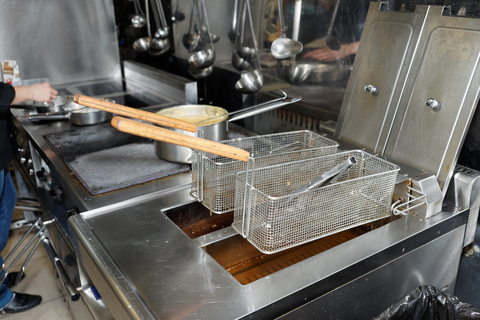
If you are involved in a food business such as a restaurant, café, or hotel, you are probably aware that you have to prevent grease from entering the sewer system after exiting your establishment’s sink and drainage. By law, all commercial kitchen areas in the U.S. are required to have grease traps installed to prevent this from happening.
A grease trap, also known as a grease interceptor, is part of the drain service structure designed to prevent grease and other food-waste materials from entering a septic system or sewer. Without it, grease and oily substances will congeal, form a solid mass, and cause blockage, which may lead to burst pipes. Damages caused by grease blockage can be very costly and taxing. That is why law requires installations of grease traps in establishments where a huge amount of grease is used.
Different types of grease traps are available, depending on how your business operates. These include single-tank traps, double-walled tanks, solid interceptors, oil-water separators, and above-ground interceptors. There are slight differences in how each type works, but they all perform the same basic function, to separate fat, oil and grease from water and solid-food waste. Imagine taking a pail of cold water and pouring in oil. The oil will float to the top of the pail and solidify.
This is how a grease trap works. From the drain, it captures the untreated water (water with grease, oil and other solid-food wastes) and deposits it into the grease-trap tank. This tank acts as a reservoir and holds the wastewater and food that passes through the trap. Solid-food wastes, being the heaviest, drop to the bottom. As the greasy substances harden, they float to the top of the tank, displacing the liquid at the middle. A tube fitting is attached to the tank, allowing the liquid to flow into the sewer or sanitary system. Some grease traps are designed to have a second tank to trap additional grease that may have escaped through the first tank, and the same process is repeated.
Like any other equipment, grease traps need to be properly cleaned out so they work as intended. Over time, it is possible to develop clogs in the flowing line (both ingoing and outgoing) and crossover tube, even if the grease-trap tank is not full.
If you have any technical issues with your grease interceptor, contact the manufacturer or hire a Drain King professional to test for and repair any malfunctions. Alternatively, a full grease trap is no longer capable of filtering any grease or solid food. You can either call the manufacturer or hire us to empty the contents of the tank and restore its operative capacity.
Common grease-trap maintenance expenses include drain snaking, power jetting, and line jetting. Maintenance is needed when drain service between the drain, grease traps, or sewer gets blocked with grease deposits. These deposits are removed by forcing water down the pipes with high pressure to push the grease out with power-jetting or line-jetting procedures.
Clogged drains, pipes, or sewers can be caused by a number of factors. These can include excess debris, overgrown roots, waste blockage, sediment build-up, or grease clogs, to name a few. In order to effectively clear a clogged drain/pipe/sewer, sometimes our professionals need to have a good idea of the cause of blockage this helps them employ correct, appropriate methods.
To properly diagnose and treat a drain clog, we use state-of-the-art, video inspection technology. By inserting a small camera into the blocked area of the drain, which allows for real-time visual inspection, our professionals can determine the cause and location of the blockage. This in turns helps them pinpoint the most effective solution to clear it up.
The technician inserts a high-resolution digital camera attached to a flexible fiber-optic cable down the pipes or drains. This tool is also equipped with powerful lights, enabling the inspection of the inside of the pipes. The video camera utilizes an infrared lighting system that contains a small transmitter. It is also attached to a screen or monitor for real-time visualization that can also be recorded. This footage shows the technician exactly where excavation is required, locating the problem in the drain line and confirming the interior condition of the line.
These cameras are capable of traveling up to 1,000 feet inside any pipe from 6 to 30 inches in diameter and inspecting any portion of the pipe, using tilt and pan technology. This innovation greatly increases productivity and helps in performing repairs or clearing up clogs in an efficient manner, saving time, effort and money.
For more information about our professional video camera technology, please feel free to contact us at Drain King today. We would be happy to provide you with a free quote on our services.
Overpowering and unpleasant sewer smell inside the house can be the result of numerous failures. The sewage disposal system depends on other systems like drain service, vent and trap systems in order to function correctly.
Smelly Odor in Home
Sewage waste, when degraded by bacteria (which has a vile odor of its own, as well), releases various pungent gases like methane and hydrogen sulfide. In addition to the strong offensive odor, these gases can be combustible and hazardous.
The possible causes include:
Incorrect or a lack of vents in the traps - Vents on a drain let the sewer gases exit the drain system without coming into the house through drain service fixtures while the traps form an airlock seal against sewer gases that prevent them from entering the home.
A clogged drain – doesn't allow the odors to get to the vents, which will force them into your home.
Improperly assembled toilet - broken seals around the toilet that allow water to leak or dry out the traps which will cause the odor. An airtight seal between the toilet and floor is absolutely vital in preventing sewer smell from coming indoors. Old, rotting or damp wood can also be blamed.
Leaky, faulty pipes, especially if they are old cast iron – Gasses can collect inside the pipes and escape into the house.
Low water level in the toilet – is another possible cause especially in toilets that don’t get used often.
These are just a few reasons why you may be smelling sewer inside the house. Please contact us at Drain King, where our professionals can determine the exact cause of the sewer smell and eliminate it. It is important to note that sewer smells are dangerous. You and your family should not be exposed to them for long periods of time.
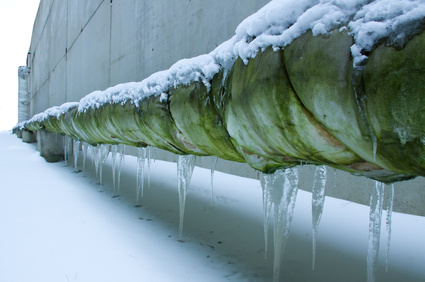
Whenever the temperature at your home or business is expected to drop below 32°F for longer than a few days, it is important to make sure your outside oil lines and heating tanks are well protected.
Oil will not freeze, but tanks and oil lines that are located outside a home or in an unheated space could freeze and lose their heat. The main reason for this is, the oil in the lines will get cloudy and then become gelled or waxed, preventing it from flowing. When this happens, you will lose your heat.
There are a few steps you can take to make sure you are prepared for a prolonged cold spell. Start by adding a fuel oil treatment to help prevent the oil from gelling or waxing. After adding a fuel oil treatment, the simplest and least expensive solution is to insulate the piping and fittings at the tank with pipe insulation and a strong tape, like duct tape. This step will need to be done before a problem occurs and the tank freezes, but is an easy way to winterize your tank before the cold snap hits.
Protecting your tank and the oil lines from freezing may be accomplished by wrapping the exposed areas in insulation and heat tape. Should the lines already be frozen, you will need to thaw them with sustained heat until they begin flowing again—then apply the insulation and tape. Follow the instructions carefully or call a Drain King professional technician to avoid overheating the pipes.
We also recommend using only a single line extending from the tank that stores the oil rather than a two-pipe system. The single oil line will keep the oil warmer and will have less time away from the heat exchange.
Another option for an outside tank is to use kerosene instead of heating oil. Kerosene will store at colder temperatures and will not need any additives or treatments to keep the lines from clogging. This is a headache-free solution. While kerosene is more expensive, it may be a more suitable option if you live in a region where it stays cold for long periods of time and if building a shed or protecting the unit from the elements is not an option.
The winter holidays are full of visiting friends and relatives. Parties, dinners, gift exchanges and game nights are just a few of the many reasons people get together. With all the extra guests in your home increasing sink, shower, and toilet usage, it's a good time to take some simple steps to avoid a Griswold-style drain service catastrophe. Nothing screams disaster like a porta-potty in the front yard!
The most important thing you can do to prevent drains clogging is to make sure they are working correctly before the holidays begin. If you notice a sluggish drain, take the necessary steps to unclog it. If your toilet isn't flushing properly, have it checked. These aren't issues that will be fixed with increased usage. In fact, the opposite is true: The more guests you welcome, the more you are overwhelming an already-burdened drain service system.
Be careful about what you put in your kitchen sink. Never dump fats or cooking oils down the drain; they will solidify in the pipe and cause a blockage. If congealed grease is left in a pan, wipe it out with a paper towel and throw it away. Avoid putting stringy, fibrous, starchy, or hard-to-grind foods in the garbage disposal. (These types of food include celery, pumpkin, banana peels, poultry skins, and carrot and potato peelings.) They can wrap around the blades and keep the motor from turning. Run cold water for at least 15 seconds before and after you turn on the disposal, and always make sure the disposal is running before you add food scraps. Scraping plates into the garbage instead of the sink will save your disposal and dishwasher from potential clogs. And finally, run the dishwasher at night so there will be plenty of hot water for showers in the morning.
In the bathroom, use a shower drain screen to help filter hair and clumps of soap that are notorious for clogging pipes, and be sure to clean it out between showers. Make sure there is a lined wastebasket near the toilet to hold unflushables like sanitary pads, cotton balls, baby wipes, Q-tips, and facial tissue. Nothing should ever go into a toilet except human waste and toilet paper. Follow the 10/10 rule: Keep showers to 10 minutes or less, and wait 10 minutes between each shower so the hot water can replenish itself.
If you find yourself with a drain emergency, the most important thing is to call Drain King right away. We are available 24/7 service emergencies.