There are many things to consider when planning a remodel to your house. Carpet or hardwood floors? Tub or shower in the new bathroom? Breakfast nook or kitchen island? Windrush or Whitewater Bay paint for the dining room? In the midst of all your design decisions, have you given any thought to your drain service requirements during the renovation? Will you need to connect to an existing gas or sewer line? Do you need new water lines installed? Do you know where your pipes are located and how deep they're buried? Having this information is critical in the early planning stages of landscaping or remodeling.
Locating sewer lines outside the home is a crucial part of every renovation. When excavation is necessary, precautions must be taken to protect and preserve underground water, sewer, and gas lines. Our trained professionals can locate these pipes with our state-of-the-art televising and locating services. We can pinpoint the exact location of all pipes, determine their composition, diagnose the degree of corrosion (and potential need for replacement), and identify how deep under the ground they were installed. This information will help you eliminate guesswork and save valuable time and money during the remodeling process.
Since any damage done to existing lines becomes the responsibility of the homeowner, it's important to know exactly what, where, and why you're digging. Trust Drain King to provide you with expert service; rely on our knowledge and experience to guide you through your upgrade. If your remodeling plans need to be adjusted slightly to allow for appropriate connection to pre-existing lines, it's better to know before you get partway through the build. You may want to take advantage of our composite detection services to ensure that your existing lines will support an increased water flow, especially where new lines connect to old. No homeowner wants to reach the completion of a remodel, only to discover it has to be torn out to get to the pipes in an emergency. No one wants to put extensive time, energy, and a great deal of money into a remodel just to see it ravaged in a crisis.
Connecting new water, sewer, and gas lines to an existing source should never be a DIY job. Call a Drain King licensed technician before you begin to plan a home remodeling project. We can help take the guesswork out of your upgrade by working with you during every phase of your remodel.
At Drain King, we take great pride in our reliable, courteous, and highly qualified technicians. We use state-of-the-art equipment to correctly diagnose and repair whatever drain service problem plagues you. We can detect and pinpoint a water- or sewer-line disruption at its exact location, and follow it up with an expert diagnostic solution, saving you considerable time, money, and frustration during the repair process.
While some of the most common household drain service problems are easy and inexpensive fixes (for example: low water pressure, slow drains, a running toilet, or a jammed garbage disposal), they may be masking larger problems that can't be fixed with a Google search and some basic tools. These advanced problems require more technical diagnoses and repairs. We can determine precisely where and why your pipes are leaking and present you with a detailed explanation of the expense and labor involved in fixing them. We can correctly install or service water heaters and softeners, helping you choose the appropriate size and efficiency for your household's needs. We can locate the cause of your sewer-line disruption and fix it quickly, without having to tear up your yard or street.
The biggest advantage to these thorough diagnostic tests and repair/installation details is that, with such comprehensive information, you can decide how you want to proceed with the repair process. We at Drain King want you to be so well-educated on your drain service diagnosis that you can make pertinent decisions about resolving the issue. If you understand the what and the why, you can determine the how and the when.
One of the first things a Drain King technician will determine is whether the problem is with the drain service or septic system, followed by the location of the trouble, whether inside or outside the building. The remainder of the repair steps vary with each diagnosis but could include snaking, water jetting, or thawing of pipes; inspecting and/or pumping the septic tank; televising and transmitting services; and below-ground line repair and excavation. We pride ourselves on our thorough and legitimate diagnostic reports. We won't add unnecessary repairs or expenses to your report details. Trust our drain service experts to guide you through the repair process with honesty and experience.
Drain Service emergencies are never convenient. Dealing with them is a hassle no one has time for in today's busy world. You've got problems, and Drain King has solutions we guarantee in writing.
Lift stations are an integral part of a gravity-flow sewer system. As waste is discharged into the sewer lines, it flows downhill toward a sewer treatment plant. Ideally, all homes or developed properties would be built below the existing sewer line so gravity could do its job without help, but in reality, it just isn't possible. Lift stations allow properties to be developed further away from the city's main sewer line, but gives them the ability to connect to the existing sewer framework. A lift station is essentially an elevator for waste.
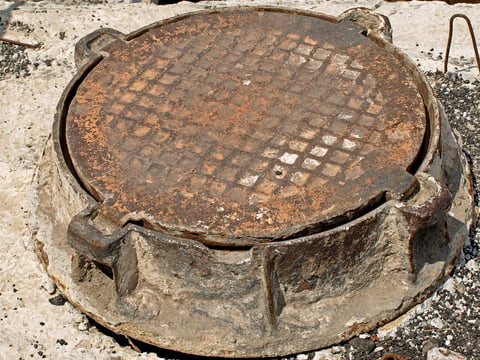
Two components make up a lift station: the wet well and the pump system. A wet well is a large, circular, underground holding tank (most commonly made of cement, but occasionally composed of steel or fiberglass) that waste drains into. After the sewage reaches a certain height in the well, a series of low-voltage floats triggers a pump, telling it when to turn on and when to stop pumping—once enough wastewater has been diverted to the main sewer line. (This process is similar to the float system used in the back of a toilet.)
If they are filled exclusively with "sanitary" waste, lift stations need very little maintenance. Problems arise when excessive grease and heavy debris find their way into the wet well. These FOG materials build up on pumps, chains, floats, and sidewalls, and will clog or damage the pump impellers, making it difficult to move waste through the sewer line. When left untreated, grease will form a solid layer across the top of the well, which prevents the lift station from pumping any waste to the main sewer line. This leads to an eventual wet-well overflow of raw sewage, which is difficult to contain and eliminate, not to mention dangerous to the environment.
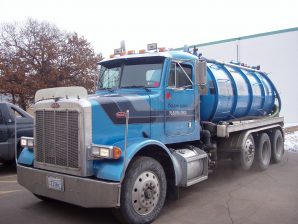
The professional at Drain King begin a through lift-station cleaning by liquefying any solid grease so it is easier to pump out. We then pump out the well using a sanitary vacuum truck, and all of the floats, impellers, and well walls are pressure-washed and thoroughly cleaned. Any solid debris left on the bottom of the tank is removed. Then, we test the entire system to ensure each part is in good working condition. Because a wet well is considered a confined space, special labor-safety regulations are in place to make entry as safe as possible. Because of the potential hazards that can arise from a confined space, only specially trained workers should attempt to enter them. Drain King’s experts have received extensive instruction in confined-space protocols. We are a safe, reliable choice for all of your drain service needs.
Gutter maintenance. Those two words often strike fear and trepidation into the hearts of even the most seasoned DIY homeowner. Every fall and spring, gutters should be cleared of debris so they can drain freely. If rainwater can't drain, it will pool around the drain outlets and overflow, which could eventually cause the gutters to pull away from the house and the wood to rot behind them. If enough water builds up, it can push its way into the house. While gutter maintenance is inconvenient, it's preferable to a leaky roof. Keep reading for some tips to help the process go more smoothly.
Ladders. Make sure you choose a sturdy one that will support your weight and isn't too difficult to carry, since cleaning out the gutters will require multiple ladder repositions. Use a ladder shelf to hold a receptacle for gutter debris. If your gutters are higher than the first story, or you become nervous when climbing a ladder, it's best to leave gutter maintenance to a professional.
Protective Gear. This includes gloves, goggles, and a dust mask. Rubber gloves won't absorb gutter sludge, and will protect your hands from animal droppings that are full of bacteria, as well as loose screws or sharp pieces of metal. The goggles and dust mask will protect you from anything that gets blasted out of clogged gutter downspouts. The last thing you want to experience while cleaning your gutters is an eye injury. Besides rotting leaves and mud, small creatures—including frogs, rats, bees, and wasps—are occasionally flushed out.
Gutter Scoop. These bright orange, inexpensive plastic scoops are available at hardware stores. The front edge of the scoop is very thin and flexible, making it an effective tool for gutter cleaning. Do not use a metal scoop! The metal can scrape across the gutter seams, loosening the caulk that holds them together. If you have metal gutters, the metal-to-metal contact can introduce rust to otherwise healthy steel. If there are already some rusty spots, this will speed up the rusting process, which leads to leaky gutters and eventual replacement.
Garden Hose. Once all the gutter grunge has been cleared, flush the gutters and downspouts with a garden hose. You can attach a pressure nozzle or sprayer for greater force and easier control. Direct the stream of water toward the downspout. If there is a clog in the downspout, you can use an auger (technician's snake) to clear it. It's easy to check for leaks at this stage, when water is flowing freely through the gutters. If you mark them, you can easily patch and repair them once the gutter is dry.
The professional at Drain King are available to answer your questions on gutter cleaning and all other drain service related issues.
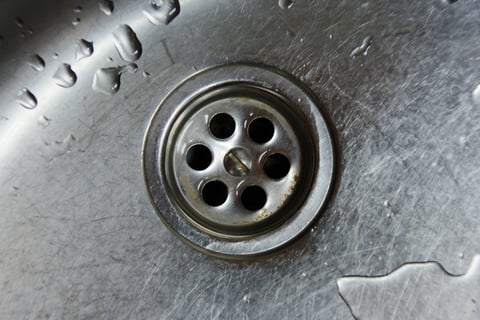
Have you ever walked into a public restroom or a restroom in an office building and been hit with a strong, unpleasant odor? This may be the result of a dirty or clogged floor drain. Floor drains are found in many places like commercial restrooms and industrial spaces, near and around water heaters, in basements, kitchens, or laundry rooms.
The floor drain captures overflow water from sinks, toilets, tubs, rain, and any other pipe in your home, and then directs it safely to a sewer or municipal storm drain, so floors stay dry and rooms do not flood.
If you have floor drains in your home or business and you smell something bad coming from them, it’s typically because the traps have dried out. Floor drains have a U-shaped or P-trap pipe, just like your bathroom sink drain. The U-shaped pipe is designed to hold water that stands in the pipe and prevents sewer gases from coming up through the drain. If you smell sewer gas, fill the drain with a five-gallon bucket of water. This will seal off sewer gases and also let you see if the drain is working properly.
Floor drains become clogged just like any other drain, even more often because they’re on the floor where dirt collects. If your floor drain is clogged or slow, take steps to remove the clog. Use a drain auger or snake to see if you can reach the clog. Floor drains are often connected to longer pipes, so if you are still having problems, please call our professionals at Drain King. We can unclog and, if needed, clean out the pipe.
Sewer clogs are a very serious drain service problem. In most cases, the water comes back into the household drain service creating a bigger problem. In some cases, one may not be aware of a sewer problem. Regular scheduled sewer maintenance, performed by a professional technician, will help eliminate sewer clogs. Typically, many pipes and drains in different parts of the house can be connected in multiple places. Problems in one area can affect the other. Therefore, in cases of sewer clogs, you would need the expertise of professional technicians to assess and repairs these clogs.
A professional and reliable drain service company or technician should have experience clearing shower drains, stairwell drains, laundry drains, flood drain clogs, to name a few. They should also have the proper large tools, equipment or machinery for clearing said sewers, no matter how long the sewers are. They should also have the ability to clean sewers or downspouts penetrated by roots or other such blockades.
A full sewer inspection must be able to determine the cause of the clogs, preferably a video inspection, in the case of main sewer cleaning, to accurately locate the problem. Provide you with detailed precautions to take, in order to avoid a future clogged sewer. A 90 day-1 year rodding guarantee on the sewers. They must also ensure to wear/use protective equipment while working, so as to not dirty the indoors. Most importantly, use proper, state of-the-art equipment so as to be cost effective. Based on the type of drain and severity of the clog/backup, several different heavy-duty commercial grade cables/snake machines, video camera inspections and high pressure jetting, etc. can be employed. A professional or expert will not only use one of these techniques effectively, but should also be able to ensure that the problem is handled for good.
Here at Drain King, we are not only a professional company that will provide you with the above benefits but you can rely on. We are clean, honest, and dependable. We have fast response times and can fix your problem in the shortest time possible. Consider calling our experts for your next sewer cleaning.