Lift stations are an integral part of a gravity-flow sewer system. As waste is discharged into the sewer lines, it flows downhill toward a sewer treatment plant. Ideally, all homes or developed properties would be built below the existing sewer line so gravity could do its job without help, but in reality, it just isn't possible. Lift stations allow properties to be developed further away from the city's main sewer line, but gives them the ability to connect to the existing sewer framework. A lift station is essentially an elevator for waste.
Two components make up a lift station: the wet well and the pump system. A wet well is a large, circular, underground holding tank (most commonly made of cement, but occasionally composed of steel or fiberglass) that waste drains into. After the sewage reaches a certain height in the well, a series of low-voltage floats triggers a pump, telling it when to turn on and when to stop pumping—once enough wastewater has been diverted to the main sewer line. (This process is similar to the float system used in the back of a toilet.)
If they are filled exclusively with "sanitary" waste, lift stations need very little maintenance. Problems arise when excessive grease and heavy debris find their way into the wet well. These FOG materials build up on pumps, chains, floats, and sidewalls, and will clog or damage the pump impellers, making it difficult to move waste through the sewer line. When left untreated, grease will form a solid layer across the top of the well, which prevents the lift station from pumping any waste to the main sewer line. This leads to an eventual wet-well overflow of raw sewage, which is difficult to contain and eliminate, not to mention dangerous to the environment.
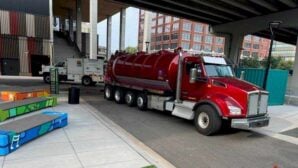
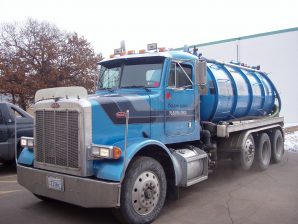
The professional at Drain King begin a through lift-station cleaning by liquefying any solid grease so it is easier to pump out. We then pump out the well using a sanitary vacuum truck, and all of the floats, impellers, and well walls are pressure-washed and thoroughly cleaned. Any solid debris left on the bottom of the tank is removed. Then, we test the entire system to ensure each part is in good working condition. Because a wet well is considered a confined space, special labor-safety regulations are in place to make entry as safe as possible. Because of the potential hazards that can arise from a confined space, only specially trained workers should attempt to enter them. Drain King’s experts have received extensive instruction in confined-space protocols. We are a safe, reliable choice for all of your drain service needs.