Behind the Scenes: What Car Wash Pit Pumping Actually Involves
A busy car wash moves a tremendous amount of water every day. But water isn’t the only thing going down the drain.
Every vehicle brings in road sand, grit, dirt, salt, oils, sediment, and other debris. Much of that material eventually settles into the car wash pits, collection traps, sand traps, interceptors, and holding tanks designed to keep it from moving farther into the drainage system.
Over time, those materials build up.
That’s where car wash pit pumping comes in.
At Drain King Inc., car wash pit pumping is more than simply lowering a hose into a pit and pumping out water. The goal is to remove the accumulated liquids, sludge, sand, grit, oils, and settled material so the system can continue doing its job.
What Builds Up in a Car Wash Pit?
Think about what comes off hundreds or even thousands of vehicles.
Road sand and grit
Mud and dirt
Road salt
Oil and automotive residue
Soap and chemical residue
Small debris
Heavy sediment and sludge
The heavier material settles toward the bottom of the pit while other materials may remain suspended or separate within the system.
If that material is never removed, the usable capacity of the pit gradually decreases.
A pit that was designed to hold a certain volume of wastewater may eventually have a significant portion of that space occupied by sludge and sediment.
What Happens During a Car Wash Pit Pumping Visit?
Every facility is different, but the process generally starts with accessing the pit or collection system and preparing the area for service.
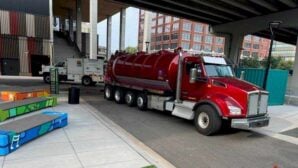
Drain King uses commercial vacuum equipment designed to remove both liquid and accumulated material from pits, traps, and holding tanks.
The vacuum hose is positioned at the service opening and material is removed from the system. The technician is not simply removing standing water. The important material is often what has settled underneath it.
That can include layers of sand, grit, sludge, oils, and sediment that have collected since the previous service.
Depending on the design of the car wash and the scope of the service, there may be multiple pits, compartments, traps, or tanks that need attention.
Once the material has been removed, it is contained in the vacuum truck and transported away from the property for appropriate handling and disposal.
Why Not Just Pump Out the Water?
Because the water usually isn’t the real problem.
The heavy material sitting at the bottom is what gradually reduces the capacity of the pit.
Removing only the liquid while leaving heavy sediment behind would allow that buildup to continue.
Effective pit pumping focuses on removing the accumulated material that the system was designed to capture.
What Happens If a Car Wash Pit Gets Too Full?
A neglected pit doesn’t suddenly announce that it needs attention.
Problems often develop gradually.
Car wash owners and managers may begin noticing:
Slow drainage
Standing water
Unusual odors
More frequent drain problems
Sediment collecting where it shouldn’t
Reduced pit capacity
Drainage backups
Wash bay interruptions
Eventually, excessive buildup can interfere with normal operation and potentially create an unexpected service call.
For a high-volume car wash, downtime is more than an inconvenience. If vehicles cannot move through the wash because the drainage system isn’t keeping up, revenue can stop along with the conveyor.
How Often Should Car Wash Pits Be Pumped?
There isn’t one schedule that fits every car wash.
A high-volume tunnel wash may accumulate material much faster than a smaller facility. Seasonal conditions can also make a difference. Minnesota vehicles bring plenty of sand, salt, snow, mud, and winter road debris into a wash facility.
The right maintenance interval depends on factors such as:
Vehicle volume
Pit capacity
Number and design of collection pits
Amount of sand and sediment entering the system
Seasonal conditions
Previous maintenance history
How quickly material accumulates between services
Rather than waiting for a drainage problem, car wash operators can establish a regular maintenance schedule based on how their specific system performs.
Scheduled Pit Pumping vs. Emergency Service
There is an important difference between scheduling pit pumping and calling after the system has already become a problem.
Scheduled maintenance allows the work to be planned around the operation of the car wash.
An emergency can mean responding after drainage has slowed, a pit has reached capacity, odors have developed, or normal operations have already been affected.
For many commercial facilities, predictable maintenance is much easier to manage than unpredictable downtime.
What Should Be Documented?
Keeping records of car wash pit service can help owners and facility managers understand how quickly material is accumulating and when the next service should be scheduled.
Depending on the service performed, documentation may include the date of service, areas serviced, material removed, observations made during the visit, and recommendations for future maintenance.
Over time, those records can help establish a maintenance schedule that fits the actual needs of the facility rather than simply guessing.
More Than Just Pit Pumping
Car wash drainage systems may involve more than one component.
Depending on the facility, Drain King can also assist with services involving:
Car wash sand traps
Oil/water separators
Stormwater systems
Storm sewer jetting and pumping
Drain cleaning
Water jetting
Sewer inspection
Commercial drain maintenance
Looking at the entire drainage system can help identify where material is accumulating and where additional maintenance may be needed.
Keep the Wash Moving
Customers see clean cars coming out of the building.
They usually never see the drainage system underneath it that makes thousands of wash cycles possible.
Keeping those pits, traps, and drainage systems maintained is part of keeping the entire operation moving.
Drain King Inc. provides car wash pit pumping and commercial drain services for car wash facilities throughout Minneapolis, St. Paul, the Twin Cities metro, and greater Minnesota.
If you operate or manage a car wash and aren’t sure when your pits were last serviced, call Drain King at 763-786-3000 to discuss your facility and maintenance needs.