“Insanity is repeating the same thing over and over and expecting the results to be different.” That quote fits restaurant grease problems better than most owners want to admit.
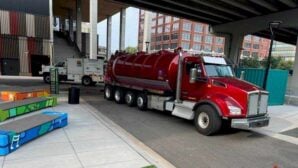
I recently had a restaurant owner upset about the cost of clearing a main line packed with grease. The job took four hours. I had to use a 4,000 PSI jetter running at 18 gallons per minute, plus a vacuum truck so the store wouldn’t flood while I worked. He told me he’d managed restaurants for 20 years and had never paid that much to have grease cleaned from the lines.
What I told him was simple: he had just paid about what a year of routine maintenance would have cost. That’s the part a lot of people miss. Emergency grease clearing is almost always more expensive, more disruptive, and a lot more stressful than staying ahead of the problem.
Why Restaurant Grease Keeps Causing Trouble
A lot of owners assume that if they have a grease trap, they’re covered. They’re not.
A grease trap is not designed to stop 100% of grease from entering the building sewer. Under normal conditions, a properly working trap may stop around 85% of the grease. That still leaves the remaining grease moving downstream into the restaurant’s drain lines. Over time, that buildup hardens, narrows the pipe, and eventually causes a blockage.
That’s why a place can seem fine for months. No backup on the floor. No issue in the restrooms. No warning signs anyone takes seriously. Then one busy day, the line stops taking flow and everything turns into an emergency.
What It Really Costs
The clearing bill is only part of it.
When a restaurant can’t open, revenue stops immediately. Staff still show up. Food is already in the building. Customers leave. Some come back later. Some don’t. If there’s a strong grease backup smell in the dining area or restrooms, that can do more damage than owners realize. People remember that.
I’ve seen businesses focus on avoiding a maintenance invoice, then end up paying far more for emergency drain service, cleanup, downtime, and lost customer trust.
Do: Schedule Routine Grease Maintenance
If a restaurant has a history of grease buildup, routine maintenance isn’t optional. It’s part of operating the kitchen.
For many restaurants, service 2 to 4 times a year is enough to stay ahead of trouble. Some need monthly attention, especially high-volume kitchens, places with heavy frying, or older drain systems that don’t give much room for buildup.
The right schedule depends on what goes down the line, how busy the kitchen is, and how the system has behaved in the past.
Do: Empty the Grease Trap Regularly
At a minimum, the grease trap should be emptied quarterly. In many restaurants, that’s just the starting point.
If the trap is undersized, poorly maintained, or seeing more grease than it was built to handle, quarterly service may not be enough. A neglected trap doesn’t just smell bad. It stops separating grease the way it should, and that pushes more grease into the drain line.
Do: Recycle Cooking Oil
Used cooking oil should be collected and recycled properly, not washed into the drain system.
This sounds obvious, but it’s still one of the most common mistakes in commercial kitchens. Even small amounts add up fast, especially when mixed with food solids and soap. What goes down hot often cools and sticks farther down the line where no one sees it building.
Don’t: Assume No Backup Means No Problem
This is one of the biggest mistakes I run into.
Just because nothing is coming up on the floor today doesn’t mean the line is clear. Grease buildup happens gradually. The pipe diameter gets smaller and smaller until flow slows down enough to cause a stoppage. By the time the symptoms are obvious, the line is often heavily restricted and much harder to clean.
Don’t: Rely on the Grease Trap to Catch Everything
A grease trap helps. It does not solve the whole problem.
If the kitchen is producing grease every day, some of it is getting past the trap. That’s normal. The issue is what happens over time when no one accounts for that remaining grease in the building sewer.
Don’t: Keep Repeating the Same Mistakes
If a restaurant has already had one major grease blockage, that’s the warning.
Paying for the same emergency again and again usually means the real issue hasn’t been addressed. The answer is usually not another last-minute clearing. It’s a maintenance plan that matches the kitchen’s actual grease load.
That’s the difference between reacting to a problem and preventing one.
What Restaurant Owners Should Expect
If a main line is badly packed with grease, clearing it may take specialized equipment and time. In heavier cases, it can require high-pressure jetting and vacuum support to keep the area from flooding during service. That’s not overkill. That’s what it takes when grease has been allowed to build up long enough.
Owners are often surprised by the cost of that kind of work, but they’re usually comparing it to a simple cleaning, not a full-scale grease recovery job under active operating conditions.
The Bottom Line
Restaurant grease problems usually don’t start with one bad day. They build slowly through routine habits, missed maintenance, and the false sense that everything is fine because nothing is backing up yet.
The smart move is simple: recycle cooking oil, keep the grease trap maintained, and service the drain lines before they become a shutdown problem. That approach costs less, disrupts less, and keeps the restaurant open.