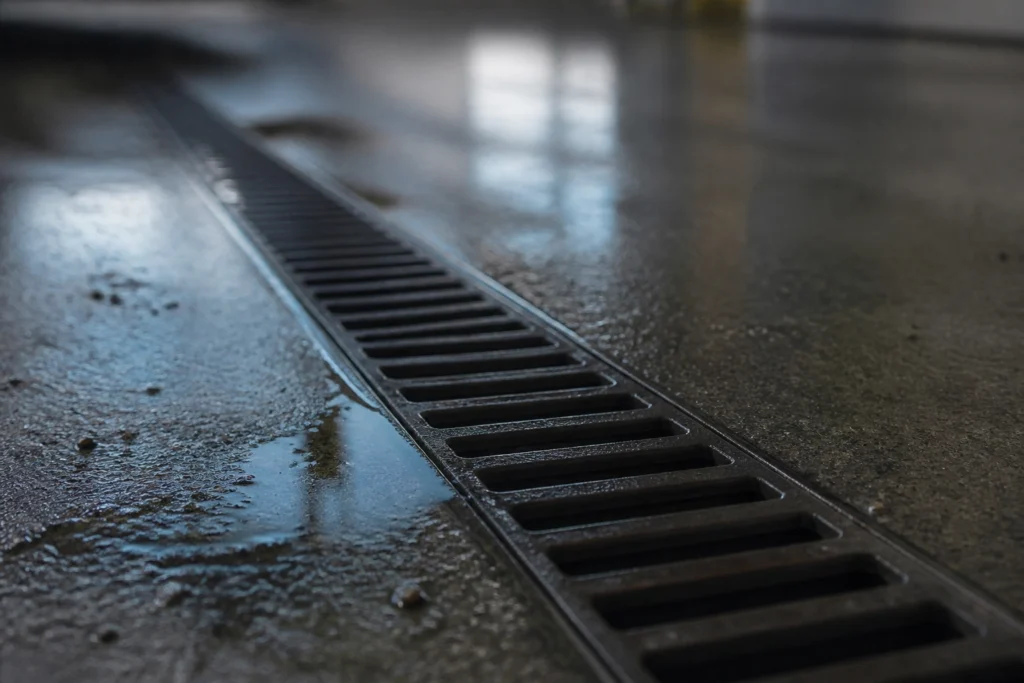
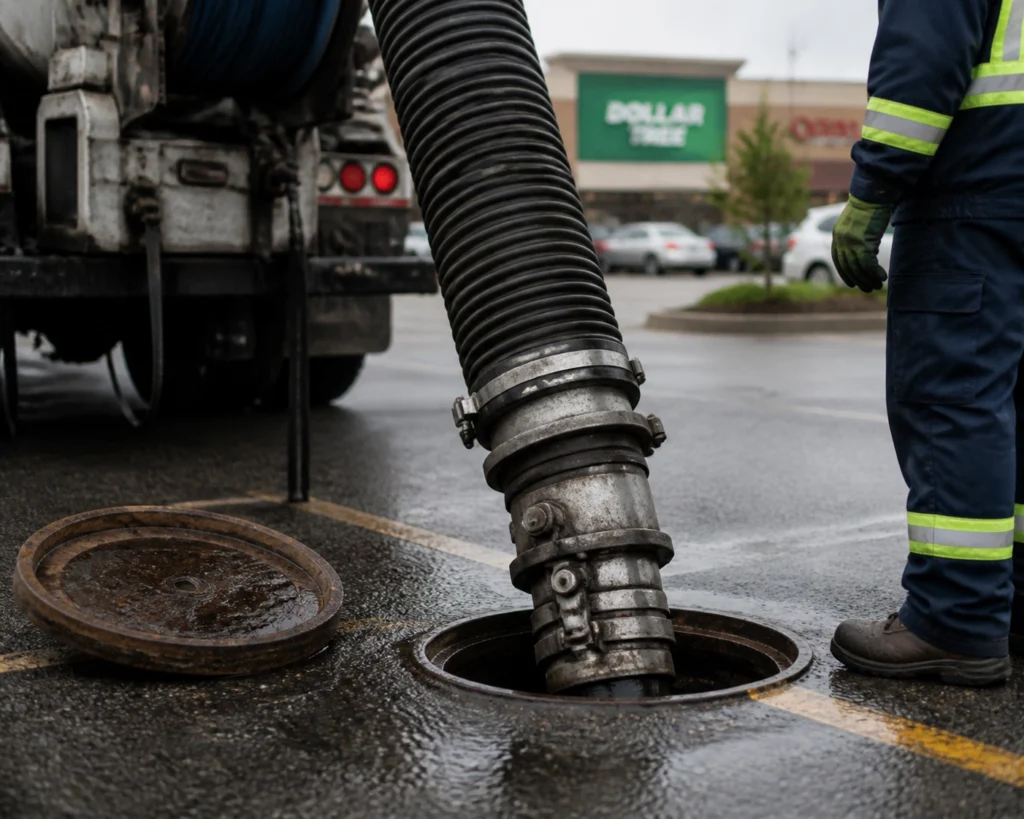
The best time to inspect a stormwater system is before the heavy rain shows up, not after. A property that gets ahead of storm season with a scheduled inspection has a much better shot at staying dry when the rain actually comes, compared to finding out about a blockage in the middle of a downpour.
For businesses with parking lots, loading docks, or basement-level entrances, a clogged stormwater drain can mean flooding that affects customers, deliveries, or equipment. A quick inspection ahead of the wet season is a small investment that heads off a much bigger disruption.
When we show up for a sand trap service call, the work is more involved than just skimming the surface. We pump out the standing wastewater first, then get into the tank itself to clear out the sand, grit, sediment, and oils that have settled and separated since the last visit.
Along the way, we check the condition of the tank and its components, since a sand trap that's been neglected for a long stretch can develop wear that a routine cleaning alone won't catch. That's part of why annual service matters even if things seem to be draining fine on the surface.
Once the trap is cleared out, wastewater can flow through the way it's supposed to, and the buildup that would otherwise turn into a slow drain or a bad smell gets hauled away and disposed of properly.
“Insanity is repeating the same thing over and over and expecting the results to be different.” That quote fits restaurant grease problems better than most owners want to admit.
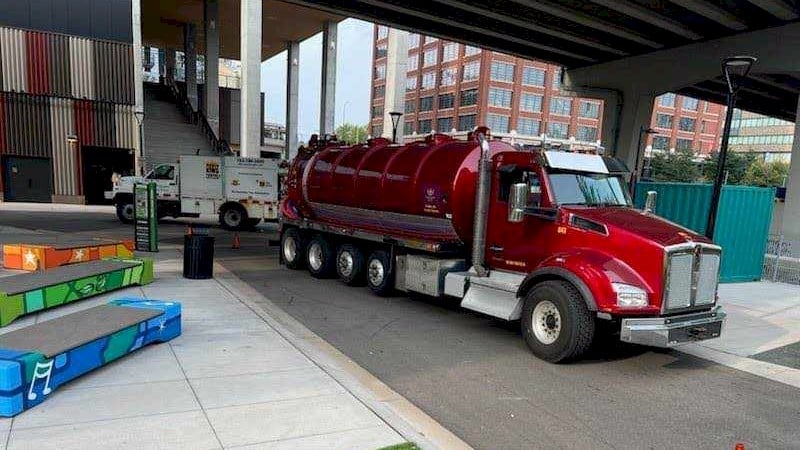
I recently had a restaurant owner upset about the cost of clearing a main line packed with grease. The job took four hours. I had to use a 4,000 PSI jetter running at 18 gallons per minute, plus a vacuum truck so the store wouldn’t flood while I worked. He told me he’d managed restaurants for 20 years and had never paid that much to have grease cleaned from the lines.
What I told him was simple: he had just paid about what a year of routine maintenance would have cost. That’s the part a lot of people miss. Emergency grease clearing is almost always more expensive, more disruptive, and a lot more stressful than staying ahead of the problem.
Why Restaurant Grease Keeps Causing Trouble
A lot of owners assume that if they have a grease trap, they’re covered. They’re not.
A grease trap is not designed to stop 100% of grease from entering the building sewer. Under normal conditions, a properly working trap may stop around 85% of the grease. That still leaves the remaining grease moving downstream into the restaurant’s drain lines. Over time, that buildup hardens, narrows the pipe, and eventually causes a blockage.
That’s why a place can seem fine for months. No backup on the floor. No issue in the restrooms. No warning signs anyone takes seriously. Then one busy day, the line stops taking flow and everything turns into an emergency.
What It Really Costs
The clearing bill is only part of it.
When a restaurant can’t open, revenue stops immediately. Staff still show up. Food is already in the building. Customers leave. Some come back later. Some don’t. If there’s a strong grease backup smell in the dining area or restrooms, that can do more damage than owners realize. People remember that.
I’ve seen businesses focus on avoiding a maintenance invoice, then end up paying far more for emergency drain service, cleanup, downtime, and lost customer trust.
Do: Schedule Routine Grease Maintenance
If a restaurant has a history of grease buildup, routine maintenance isn’t optional. It’s part of operating the kitchen.
For many restaurants, service 2 to 4 times a year is enough to stay ahead of trouble. Some need monthly attention, especially high-volume kitchens, places with heavy frying, or older drain systems that don’t give much room for buildup.
The right schedule depends on what goes down the line, how busy the kitchen is, and how the system has behaved in the past.
Do: Empty the Grease Trap Regularly
At a minimum, the grease trap should be emptied quarterly. In many restaurants, that’s just the starting point.
If the trap is undersized, poorly maintained, or seeing more grease than it was built to handle, quarterly service may not be enough. A neglected trap doesn’t just smell bad. It stops separating grease the way it should, and that pushes more grease into the drain line.
Do: Recycle Cooking Oil
Used cooking oil should be collected and recycled properly, not washed into the drain system.
This sounds obvious, but it’s still one of the most common mistakes in commercial kitchens. Even small amounts add up fast, especially when mixed with food solids and soap. What goes down hot often cools and sticks farther down the line where no one sees it building.
Don’t: Assume No Backup Means No Problem
This is one of the biggest mistakes I run into.
Just because nothing is coming up on the floor today doesn’t mean the line is clear. Grease buildup happens gradually. The pipe diameter gets smaller and smaller until flow slows down enough to cause a stoppage. By the time the symptoms are obvious, the line is often heavily restricted and much harder to clean.
Don’t: Rely on the Grease Trap to Catch Everything
A grease trap helps. It does not solve the whole problem.
If the kitchen is producing grease every day, some of it is getting past the trap. That’s normal. The issue is what happens over time when no one accounts for that remaining grease in the building sewer.
Don’t: Keep Repeating the Same Mistakes
If a restaurant has already had one major grease blockage, that’s the warning.
Paying for the same emergency again and again usually means the real issue hasn’t been addressed. The answer is usually not another last-minute clearing. It’s a maintenance plan that matches the kitchen’s actual grease load.
That’s the difference between reacting to a problem and preventing one.
What Restaurant Owners Should Expect
If a main line is badly packed with grease, clearing it may take specialized equipment and time. In heavier cases, it can require high-pressure jetting and vacuum support to keep the area from flooding during service. That’s not overkill. That’s what it takes when grease has been allowed to build up long enough.
Owners are often surprised by the cost of that kind of work, but they’re usually comparing it to a simple cleaning, not a full-scale grease recovery job under active operating conditions.
The Bottom Line
Restaurant grease problems usually don’t start with one bad day. They build slowly through routine habits, missed maintenance, and the false sense that everything is fine because nothing is backing up yet.
The smart move is simple: recycle cooking oil, keep the grease trap maintained, and service the drain lines before they become a shutdown problem. That approach costs less, disrupts less, and keeps the restaurant open.
If your sinks are draining slow or not at all and you suspect frozen drain lines, don’t panic. It’s a headache, for sure, but there’s a good chance you can tackle the issue before needing emergency help. Here’s what I recommend if you’ve got frozen drains and you want to fix things fast (and safely).
First Step: Check and Prep
So, you think something’s frozen inside your drains. The best way to start is a little detective work:
Turn up the heat: Raise the temperature in your home. Heat helps thaw frozen pipes and lines from the inside out.
Open doors and cabinets: If you’ve got drains running behind cabinets or in closets, swing open those doors. Letting warmer air reach the pipes can make a difference.
Look and listen for trouble: Peek around for water spots on walls or ceilings. Listen for dripping or weird gurgling. If you spot obvious leaks or standing water, halt the DIY and move on to seeking help from your drain service experts.
Stay safe and tidy: Lay down towels under affected areas just in case things start to thaw and get messy.
Try the Hot Water and Salt Trick
Here’s a classic that’s safe for most drains (and feels a little like magic):
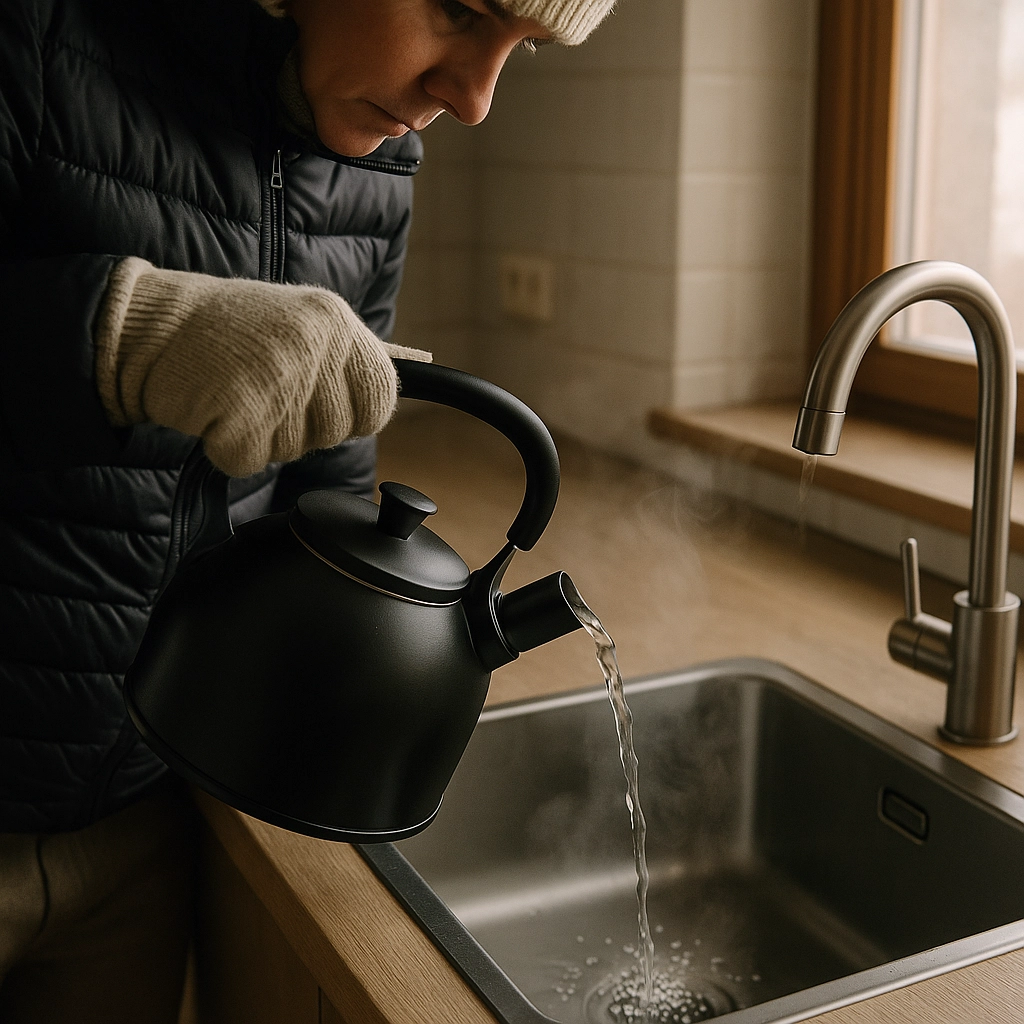
Heat some water: Boil a full kettle, then let it cool for about a minute to avoid pouring boiling water directly down the drain (super high heat can sometimes shock certain pipe materials).
Add salt: Stir in a generous cup of kosher salt. Salt lowers the freezing point, helping break up ice.
Pour steadily: Tip your salt-water mixture slowly down the frozen drain.
Repeat: Give it a few minutes, then try again. Sometimes it takes a couple of rounds.
You’ll need a bit of patience here. If the clog is stubborn, keep at it, but don’t force it.
Warming Things Up: Heat Methods That Work
If you can get access to the actual line—like those under a sink, or in the basement—these gentle heat approaches can help:
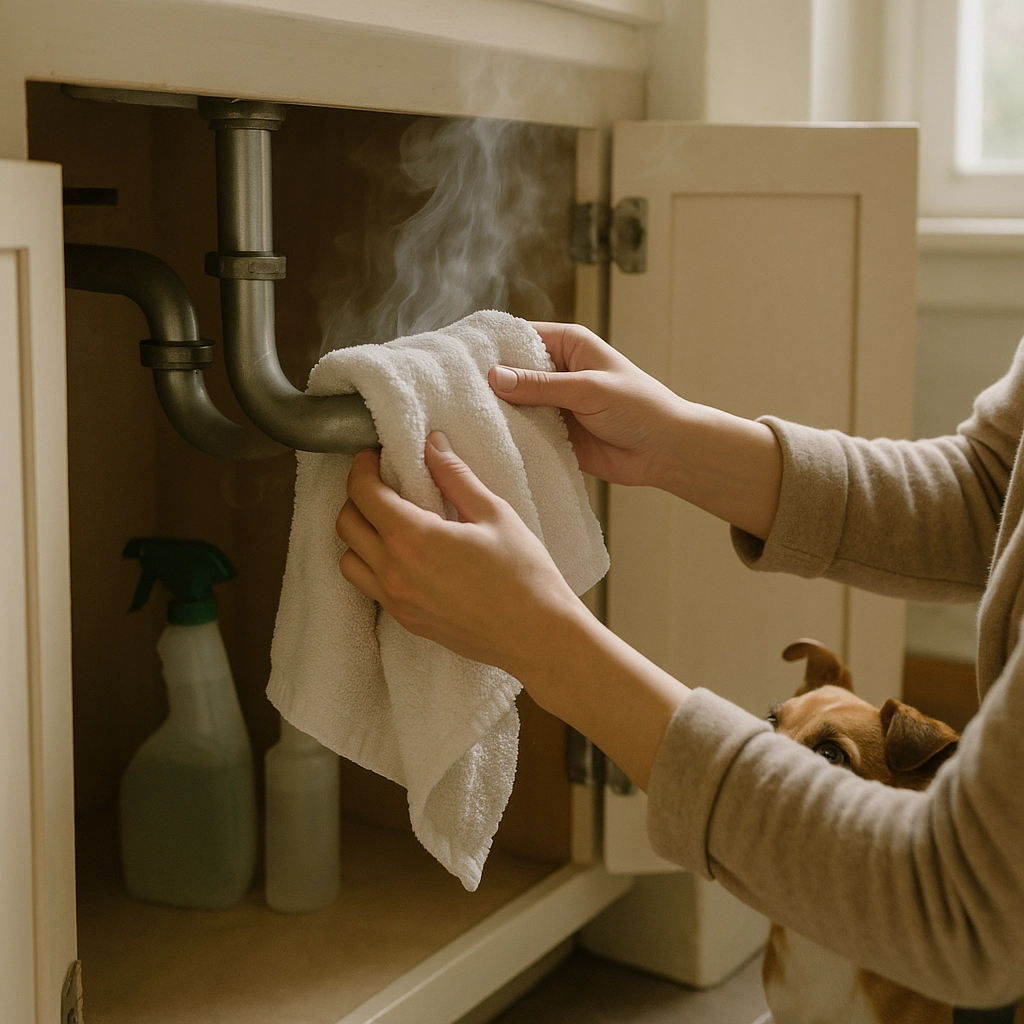
Wrap with Hot Towels
Soak a couple of towels in hot water, wring them out a bit, then wrap them around the frozen section of the line. Re-wet with hot water as needed. This works best with easy-to-reach, exposed drains and keeps things safe.
Use a Heat Lamp
If your frozen line is in a crawl space or basement, try a heat lamp. Aim it right at the problem spot—but remember, don’t leave it unattended. Heat lamps work slowly, but steadily, and can be a good way to loosen stubborn ice.
Try a Heat Cable
Got a freeze that keeps coming back every winter? Consider heat cables (sometimes called heat tape). You wrap these right around the exterior of the pipe, plug them in, and let them do the warming for you. It’s smart to read the directions closely. And if you’ve never used one before, get advice from someone who has.
Whatever You Do, Stay Safe
When you’re dealing with frozen drain lines, you don’t want to take risks. Here are a few big “don’ts” that I always share:
No open flames: Blowtorches, lighters, or any open flames are never a good idea near pipes. Fires and even pipe damage can result.
Don’t go wild with force: Avoid banging on or over-heating any pipes. Sudden temperature changes can create cracks or cause old pipes to burst, making the problem way worse.
Handle electricity with care: If you try a heat cable or lamp, check there’s no water nearby and always plug things into a GFCI-protected outlet.
If you don’t know exactly where the freeze is happening or things just aren’t working, play it safe. Sometimes what seems like a minor issue is hiding a bigger one.
Keeping Things from Freezing Again
Once you’ve thawed your lines (or while you’re waiting for them to open up), try a few quick prevention steps to help you save hassle this winter:
Keep the heat up: Don’t let your house dip too low overnight, especially if temperatures outside drop fast.
Open up the airflow: In extra-cold snaps, leave cabinet doors open under sinks and let warm air circulate.
Drip taps during cold waves: A slow, steady drip helps keep water moving and less likely to freeze up tight.
Seal drafts: Check for cold air sneaking in near exterior walls and around pipe exits; a little weather-stripping or insulation goes a long way.
When to Call the Drain Pros
DIY can fix a lot, but there are clear times to call for help:
There’s visible leaking, serious water pressure drops, or you suspect a burst.
You absolutely can’t find the frozen spot, even after checking obvious spots near exterior walls.
After an hour or so of trying the above methods, there’s zero improvement.
Drain service experts have tools like video inspection to spot exactly where the freeze is. Some use special steam-blasting machines to safely thaw deep or buried lines—these aren’t available for home use but will quickly solve the ice problem and get your drains flowing again.
If disaster strikes and you see leaks: turn off your main water or drain shutoff valve and get on the horn with your local drain team. That’s what we’re here for!
If you’re running a car wash, you know that your business literally lives and dies by its ability to move water. You’ve got high-pressure sprayers, chemical mixers, and conveyors all humming along, but none of that matters if the water has nowhere to go. At the heart of your facility's health is the sand trap: also known as a grit trap or sediment pit. It’s the unsung hero that keeps the mud, road salt, and debris from your customers' cars out of the municipal sewer lines.
However, because these traps are buried under heavy grates or concrete lids, they are often a case of "out of sight, out of mind": until they aren't. When a sand trap hits its limit, it doesn't just stop working; it starts causing a cascade of problems that can lead to emergency shutdowns, expensive repairs, and even legal headaches.
As part of the team here at Drain King Inc., we’ve seen it all. We want to help you spot the trouble before it turns into a disaster. Here are the most common signs that your car wash sand trap is full and needs professional attention immediately.
1. The Slow-Motion Wash: Slow Drains and Water Pooling
The most obvious sign that your sand trap is reaching its limit is slow drainage. In a high-volume car wash, water should disappear almost as quickly as it hits the floor. If you notice that water is lingering in the bays longer than usual or that "puddles" are starting to form during a wash cycle, it’s a clear signal that the sediment level is too high.
Think about how your trap works: it’s a two-chamber system designed to let solids settle at the bottom while cleaner water flows out the top. When the bottom of that tank is packed with three feet of sludge and sand, there’s simply no volume left for the water. The system gets restricted, and the water starts to stack up in your trench drains.
If you find your staff having to squeegee water toward the drains more than usual, don't ignore it. Once the water starts backing up, it’s only a matter of time before the entire system stalls. Catching this early is key to staying open during your busiest hours.
2. That Unmistakable "Eau de Sewer" Odor
Car washes aren't exactly known for smelling like a field of lilacs: usually, it’s a mix of soap, wax, and wet metal. However, a persistent, unpleasant odor coming from your drains is a major red flag.
While the sand trap is designed to catch grit, it also catches organic material, oils, and grease. When the trap is full or the water becomes stagnant because it’s not moving through the system properly, that organic gunk starts to break down. This creates a "rotten egg" smell or a heavy, swampy odor that can drift into your equipment rooms and, worse, your customer-facing areas.
If your customers are wrinkling their noses as they pull into a bay, it’s a sign that the bacterial load in your trap is out of control. A thorough cleaning from a commercial drain cleaning specialist can flush out those odors and get your bays smelling fresh (or at least like soap again).
3. The Visual "Danger Zone" Check
Sometimes, the best way to know if you're in trouble is to just take a look. You don’t need to be a drain service expert to spot a problem. If you can safely lift a grate or a lid, look for thick layers of mud or debris near the top of the trap itself.
In a healthy trap, you should see water with a relatively clear path to the crossover or outgoing pipes. If you see sediment piling up so high it’s visible just beneath the water’s surface, or if the water looks extra murky and thick, you’re definitely in the "danger zone."
Don’t wait for the water to stop moving entirely. If you see sludge building up near the outlet pipe, it means that grit is likely already washing into your secondary lines. This is where winter drain problems often start, as sand and salt from the road settle in pipes and freeze or compact during the colder months in the Twin Cities.
4. Frequent Backups and Overflows
If you’ve reached the point where water is actually bubbling back up out of floor drains or seeping out from under the sand trap lids, you are in a "code red" situation. This usually means one of two things:
The crossover pipe is blocked: The first chamber is overflowing, but the second one looks okay.
The outgoing pipe is blocked: Both chambers are high, and the system is totally backed up.
This isn't just a nuisance; it’s a liability. Overflows can lead to slippery surfaces for customers and can even damage your expensive wash equipment. When a backup occurs, the pressure can force sand into parts of your drain service that were never meant to handle it. This often requires a specialized drain jetting service to clear the lines completely.
Why Regular Pumping is Your Best Insurance Policy
I always tell our clients that sand trap pumping is the ultimate insurance policy for their car wash. Running a wash is all about volume, and every car that passes through leaves behind a little bit of the road.
By scheduling regular maintenance, you’re essentially "cleaning the filter" of your entire operation. It’s a lot cheaper and less stressful to have a scheduled pump-out every few months than it is to lose a full day of revenue on a busy Saturday because your drainage system finally gave up. We work with owners across the cities we serve to find a schedule that fits their specific car count, ensuring they never have to deal with the headache of a mid-day backup.
Drain King Inc crews providing commercial grease trap pumping service across Minneapolis and the Twin Cities metro.
Protecting Your Main Sewer Lines
Your sand trap is the first line of defense for your entire property's drain service. Its job is to catch the heavy stuff so it doesn't travel further down the line. When a trap is neglected and fills up, that sand and grit starts washing into your main sewer lateral: the pipe that connects your building to the city's main.
Grit is incredibly abrasive and heavy. Unlike soft clogs, it doesn't just wash away with a little extra water pressure. Once it settles in your main lines, it becomes a solid mass that is much harder (and more expensive) to remove. Protecting those pipes from the start is much easier on your budget.
At Drain King Inc., we take a "trap-to-street" view of your system. When we service your sand traps, we’re also looking out for the health of your main lines. Preventing grit from ever entering your primary sewer pipes is the best way to avoid the massive repair bills that come with long-term sediment damage.
Staying Compliant and Avoiding Fines
In the Twin Cities and surrounding areas, there are strict environmental regulations regarding how car wash waste is handled. Sand traps are designed to catch heavy solids and oily residue before they enter the municipal sewer system. If you let your trap overflow, those contaminants head straight for the city pipes.
Cities don't take kindly to sand in their sewers. If an inspector finds that your car wash is the source of a grit buildup in the municipal line, you can face major environmental violations and some very expensive fines.
Proper disposal is just as important as the cleaning itself. When we pump your sand trap, we don't just "make it go away": we ensure that all the sludge and wastewater are transported and disposed of according to all state and local guidelines. Keeping accurate records of your maintenance and disposal is your best defense if an authority ever comes knocking. We handle the dirty work so you can stay on the right side of the law.
How Often Should You Clean Your Trap?
There’s no one-size-fits-all answer, but here’s a general rule of thumb for most car washes:
Typical Car Wash: Every 1–3 months.
High-Volume Locations: Possibly every month, especially during the winter when road salt and sand are at their peak.
Self-Serve Bays: These often collect more heavy mud from trucks and off-road vehicles, so they may need more frequent visual checks.
If you’re not sure where your trap stands, it’s always better to be proactive. You can find more about how we diagnose these issues on our diagnostics and details page.
Final Thoughts for Car Wash Owners
Slow drains and strange smells are your car wash's way of telling you that it's struggling. Ignoring these signs doesn't just risk a messy afternoon: it risks your equipment, your reputation, and your bottom line.
Whether you’re dealing with a sudden backup or you just realized it’s been a year since your last pump-out, getting a professional drain service team on-site is the best way to keep the water moving. We’ve spent years helping Twin Cities business owners keep their drains clear and their businesses running smoothly.
If you're noticing any of the signs we talked about today, don't wait for the water to stop flowing. A little maintenance now goes a long way in preventing a total shutdown later. Keep those traps clean, and keep those cars rolling!
Running a restaurant means dealing with a lot of grease and cooking oil every single day. If you're like most restaurant owners, you might see that used oil as just another waste product to get rid of. But here's the thing – that "waste" could actually be working for you instead of against you.
I've seen too many restaurant owners struggle with clogged drains, expensive emergency service calls, and hefty disposal fees, all because they didn't know about the benefits of proper grease recycling. After years in the drain service industry, I can tell you that the restaurants doing it right aren't just helping the environment – they're protecting their bottom line and avoiding major headaches down the road.
Let me share three things every restaurant owner should know about grease recycling that could change how you think about that used cooking oil.
Your Used Grease Can Actually Make You Money
This might sound too good to be true, but companies that specialize in grease recycling often pay restaurants for their used cooking oil. Instead of paying to have it hauled away as waste, you can turn it into a revenue stream. With Americans producing over 2.5 billion gallons of used cooking oil every year, there's a huge demand for this material.
The financial benefits go way beyond just getting paid for your oil, though. When you properly recycle grease instead of dumping it down drains, you're preventing some seriously expensive problems. I've responded to countless emergency calls where restaurants faced thousands of dollars in drain cleaning costs, kitchen shutdowns, and even health code violations – all because grease built up in their drain systems.
Think about it this way: when grease goes down your drains, it doesn't just disappear. It cools, hardens, and creates blockages that get worse over time. What starts as a slow drain becomes a complete backup, and suddenly you're dealing with water backing up into your kitchen during the dinner rush. The emergency drain service calls, the lost business, the cleanup costs – it all adds up fast.
Regular grease recycling combined with proper grease trap maintenance keeps your drain systems running smoothly. Some recycling programs even convert the oil into biofuel that can power delivery vehicles or equipment, creating additional cost savings over time.
You're Making a Real Environmental Impact
When you recycle grease properly, you're not just solving a disposal problem – you're contributing to a cleaner environment in ways you might not realize. That used cooking oil gets transformed into biodiesel, a renewable energy source that burns much cleaner than traditional fossil fuels.
The EPA has found that producing biofuel from waste grease results in an 86 percent reduction in greenhouse gases compared to regular fuel consumption. That's a massive environmental benefit coming directly from your kitchen waste. Your restaurant becomes part of the solution instead of part of the problem.
Here's what really impressed me: recycling prevents all that grease from ending up in landfills or, worse, in our water systems. When grease enters waterways, it creates environmental damage that affects entire communities. By recycling, you're preventing water pollution and reducing the strain on waste management systems.
Your customers notice these efforts too. More people are choosing to support businesses that demonstrate environmental responsibility. When you can tell customers that your restaurant recycles grease into clean-burning fuel, it becomes a point of pride and differentiation from competitors who haven't made this commitment.
The circular economy aspect is pretty cool too – your waste becomes someone else's valuable resource, supporting other industries and creating jobs in biodiesel production. It's environmental stewardship that makes business sense.
It Keeps You Compliant and Protects Your Operations
Local governments have gotten serious about how restaurants handle grease disposal, and the penalties for non-compliance can shut you down. Health code violations, hefty fines, and forced closures aren't just threats – they're realities I've seen happen to restaurant owners who didn't take grease management seriously.
Proper grease recycling keeps you on the right side of these regulations while protecting your drain systems from the kind of damage that creates major operational disruptions. When restaurants pour grease down sinks, it creates problems that go way beyond your own kitchen.
The grease hardens inside pipes, restricting water flow and creating unsanitary conditions. I've seen entire restaurant kitchens shut down because grease buildup led to sewer backups that contaminated food prep areas. The cleanup costs alone can be devastating, not to mention the lost revenue from being forced to close.
But it's not just about avoiding problems – it's about creating reliable operations. Restaurants with proper grease recycling programs and well-maintained grease traps don't experience the sudden drain emergencies that can ruin a busy night. Their kitchen systems work consistently, their staff can focus on food service instead of drain issues, and they build a reputation as clean, well-managed establishments.
The community benefits matter too. When your restaurant handles grease responsibly, you're supporting public infrastructure instead of straining it. Municipal drain systems stay cleaner, public transportation can use biodiesel fuel made from recycled restaurant oil, and you become known as a business that contributes positively to the community.
Making It Work for Your Restaurant
Setting up grease recycling is usually easier than restaurant owners expect. Most recycling companies handle the logistics – they provide containers, schedule regular pickups, and even handle the documentation you need for regulatory compliance.
The key is finding a recycling partner who understands restaurant operations and can work around your schedule. You want someone who shows up reliably, provides clean containers, and doesn't disrupt your service. Many programs also include grease trap cleaning services, so you can handle multiple maintenance needs with one relationship.
Regular maintenance becomes crucial for making the system work smoothly. Clean grease traps process waste more effectively, reducing odors and preventing backups that could force you to close. When recycling and trap maintenance work together, you get maximum protection for your drain systems while meeting all regulatory requirements.
Don't forget to train your staff on proper grease handling procedures. Everyone in the kitchen needs to understand why grease shouldn't go down drains and how to use recycling containers correctly. This training prevents accidents that could create expensive problems and helps maintain the system you've put in place.
Restaurant grease recycling isn't just about being environmentally responsible – though that's certainly important. It's about smart business management that protects your operations, reduces costs, and can even generate revenue.
The restaurants I work with that have embraced grease recycling consistently report fewer drain emergencies, lower maintenance costs, and better relationships with local health inspectors. They've turned what used to be a disposal expense into either a cost savings or actual income source.
Most importantly, they sleep better knowing their drain systems are protected from the kind of grease buildup that creates middle-of-the-night emergency calls. When you're running a restaurant, that peace of mind is worth a lot.
If you're still disposing of grease as waste, you're missing an opportunity to improve your operations while contributing to environmental sustainability. The programs are available, the benefits are real, and the setup is usually simpler than you'd expect.
Your used cooking oil has value – it's time to start capturing that value instead of paying to throw it away.