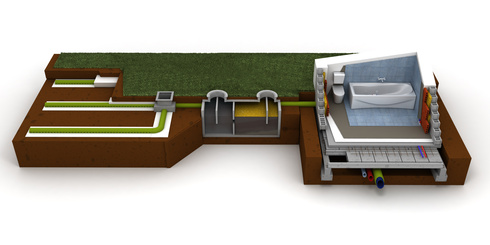
The average homeowner likely knows sewer lines help transport wastewater from the home to underground sewer mains. Other than that, most homeowners give little thought to their sewer lines, until there’s a problem. A sewer line backup could lead to a costly and damaging impact on your home and belongings.
Knowing two of the most common red flags could save you from a complete sewer backup, including water overflow from a drain or toilet, or a gurgling sound coming from the pipes or drains. Listen to your house and take notice of percolating water.
Your home’s drain service resembles a tree. You have one main line that runs out of the house with smaller branches off that main line. If a clog is in the main line, any water you run in the house will cause problems. If it’s a secondary line, problems are just going to be isolated to that area. Tree roots are the primary cause of sewer line clogs, especially in older homes. In newer homes, common sources of clogs include feminine hygiene products, paper towels, and even certain types of thicker toilet paper.
A very obvious sign of a sewer drain clog is when more than one drain service fixture backs up at the same time. If you suspect that you have a sewer drain clog, start by checking other fixtures in the home. Toilets have the most direct path to the sewer and the biggest drain line in the house, so if there is a problem with the sewer drain you will notice it here. Other drains typically affected by a main line stoppage are those in the tub and shower, because they sit lower down than a sink drain. Check whether the tub and shower drains are blocked.
If you suspect a sewer clog but can’t find the source, please call the professionals at Drain King for a diagnosis.